

Is peanut butter healthy for weight loss? Yes, as long as you measure it. Two level tablespoons of peanut butter have about 188 calories, 8 g of protein, and 3 g of fiber.
That protein and fiber help you stay full, so a healthy weight loss plan has room for peanut butter. Below are the numbers, what studies show, how to pick a jar, and easy ways to eat it.
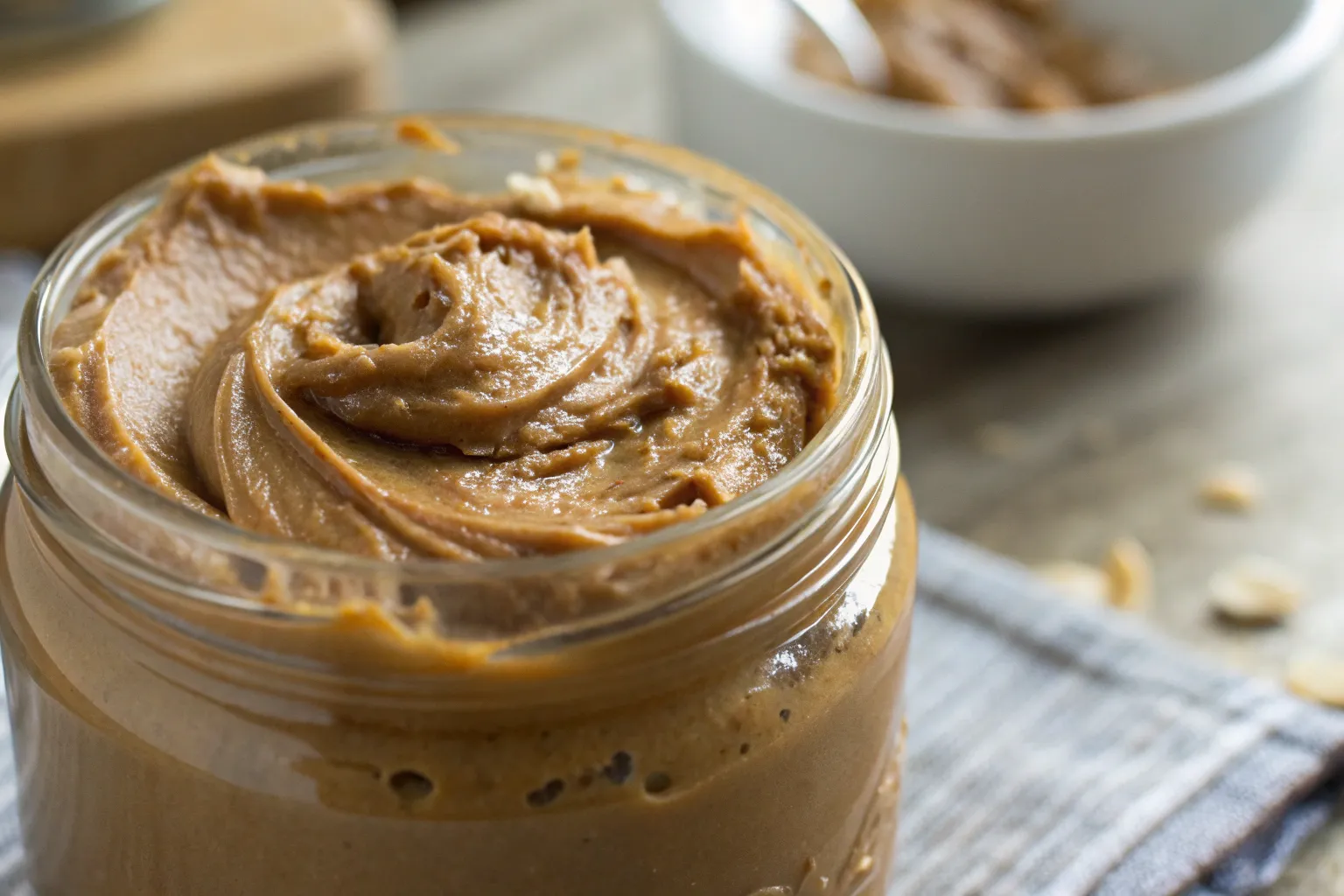
Table of contents
Is Peanut Butter Healthy for Weight Loss? The Short Answer
- A 2 tablespoon (32 g) serving of peanut butter has about 188 calories, 16 g of fat, and 8 g of protein.
- Protein, fat, and fiber slow digestion, so peanut butter at breakfast can keep hunger down for hours.
- The main catch is portion size, because one extra tablespoon adds about 94 calories.
- Choose a peanut butter with only peanuts and salt, and measure every serving for healthy weight loss.
What’s in 2 Tablespoons of Peanut Butter
Peanut butter is dense in calories and rich in nutrients. These USDA-based numbers cover 2 level tablespoons (32 g) of smooth peanut butter.
- Calories and protein: about 188 calories and 8 g of protein.
- Fat: 16 g, mostly unsaturated, with about 3 g of saturated fat.
- Carbohydrates: 7 g, including 3 g of fiber.
- Minerals and vitamins: useful amounts of manganese, niacin, magnesium, and vitamin E.
For healthy weight loss, the calorie line matters most, since fat supplies over 75% of the calories in peanut butter. Natural jars land close to these numbers. Sweetened jars add sugar on top.
What the Research Says About Nuts and Weight
Studies link nuts, including peanuts, to less weight gain over time. The evidence for peanut butter itself is thinner.
Nuts and Long-Term Weight Gain
A Harvard-led team followed nearly 290,000 US health professionals for more than 20 years. The team tracked peanuts and peanut butter separately, which matters for healthy choices.
The results, published in BMJ Nutrition, Prevention & Health, tied extra nuts to less weight gain. Each added half serving, or 14 g a day, helped.
In that study, eating more peanut butter showed no such benefit. The design was observational, so it shows a link, not proof.
Fullness After Breakfast
A Purdue University trial gave women with obesity 3 tablespoons of peanut butter at breakfast. Their desire to eat stayed lower for 8 to 12 hours. Their bodies also released more PYY, a gut hormone tied to fullness.
Only 15 women took part, so treat this as a promising early result. That makes a peanut butter breakfast a reasonable choice for weight loss.
Why Whole Peanuts May Beat the Jar
Your body absorbs less fat from whole peanuts than from peanut butter, a useful detail for healthy weight loss. A 2008 study in the International Journal of Obesity measured this directly. People eating whole peanuts excreted more fat than people eating peanut butter or peanut oil.
Grinding likely breaks open the cell walls, so more of the fat gets absorbed. This may explain why peanuts, not peanut butter, matched less weight gain in the Harvard study.
Where Peanut Butter Can Hurt Weight Loss
Even healthy peanut butter hurts weight loss when the portion grows without you noticing. One extra tablespoon adds about 94 calories. Eating straight from the jar makes that hard to track.
Sweetened jars add a second problem. Some brands add sugar, molasses, or honey, plus hydrogenated oil to stop the oil from separating. Those extras add calories without adding protein or fiber.
Reduced-fat peanut butter is not a shortcut either. Brands often replace the fat with sugar or starch, so the calories barely drop. Count peanut butter like any other fat, such as oil or butter.
How to Choose a Better Jar
The healthy pick for weight loss is a peanut butter that lists only peanuts and maybe salt.
- Read the ingredients first. Peanuts should come first and almost alone. Skip jars with added sugar, corn syrup, or hydrogenated oil.
- Check the name on the label. US rules require anything sold as peanut butter to contain at least 90% peanuts. Products sold as a spread can contain less.
- Watch the sodium. Healthy weight loss also means watching salt, so unsalted or lightly salted peanut butter is the safer pick.
- Expect oil on top. Natural jars separate. Stir the oil back in once, then keep the jar in the fridge to slow separation.
How to Eat Peanut Butter for Weight Loss
Peanut butter supports weight loss best when you measure it and pair it with fiber or protein.
- Measure with a real tablespoon. Level it off with a knife. Two level tablespoons make one 32 g serving.
- Eat it at breakfast. Spread 1 tablespoon of peanut butter on whole-grain toast for a healthy weight loss breakfast. For more protein, serve it beside scrambled eggs with cottage cheese.
- Pair it with produce. Apple slices, banana, or celery add crunch and fiber for very few calories.
- Blend it into a smoothie. One tablespoon adds about 4 g of protein. It works well in a berry kefir smoothie, where tart berries balance the richness.
- Try powdered peanut butter. Powdered peanut butter is a healthy swap for weight loss on a tight calorie budget. Makers press out most of the oil, so it has far fewer calories per spoonful.
Who Should Check With a Doctor First
Peanuts are a major allergen, so anyone with a peanut allergy should avoid peanut butter completely. People with kidney disease may need to limit potassium and phosphorus, which peanuts contain.
On a medically supervised weight loss plan, ask how peanut butter fits your healthy eating targets. Peanut butter cannot cause weight loss on its own. Your total calories, sleep, and activity matter more.
This article is for general information and is not medical advice.
Peanut Butter and Weight Loss FAQs
Yes, if it fits your calorie target. Eating 1 to 2 tablespoons of peanut butter a day can be part of weight loss. Measure each serving so the calories stay predictable.
Neither wins by much. Crunchy and smooth peanut butter have nearly the same calories and protein. Pick the texture you enjoy, and measure it the same way.
Usually, yes. Natural peanut butter skips added sugar and hydrogenated oil, which makes it the healthy choice for weight loss. Its calories are about the same, so portions still matter.
Breakfast is a smart choice. In a Purdue trial, peanut butter at breakfast lowered the desire to eat for hours. Any time works if the portion fits your day.
So, is peanut butter healthy for weight loss? It is, when you measure 2 level tablespoons per serving. Pick a jar made from peanuts and salt only.
How do you fit peanut butter into your meals? Share your favorite way in the comments below.





Leave a Reply