

This lobster bisque recipe delivers a rich, velvety soup with sweet lobster meat in a cream-based broth flavored with tomato, brandy, and aromatics. The lobster shells simmer into the stock to build deep seafood flavor, and the bisque is ready in 90 minutes from start to finish.
The recipe makes 6 servings and uses both the lobster meat and shells. Straining the shells after simmering gives the bisque its signature concentrated flavor. The bisque keeps for 3 days in the refrigerator and reheats gently on the stove.

Table of contents
Why This Lobster Bisque Recipe Works
- Simmering the lobster shells for 30 minutes extracts their flavor compounds into the stock, giving the bisque its characteristic seafood depth.
- Tomato paste adds umami and balances the cream’s richness without making the bisque taste like tomato soup.
- Straining the bisque twice removes shell fragments and creates the smooth, refined texture this recipe is known for.
- Adding the cooked lobster meat at the end keeps it tender, since overcooking turns lobster rubbery.
How to Make Lobster Bisque
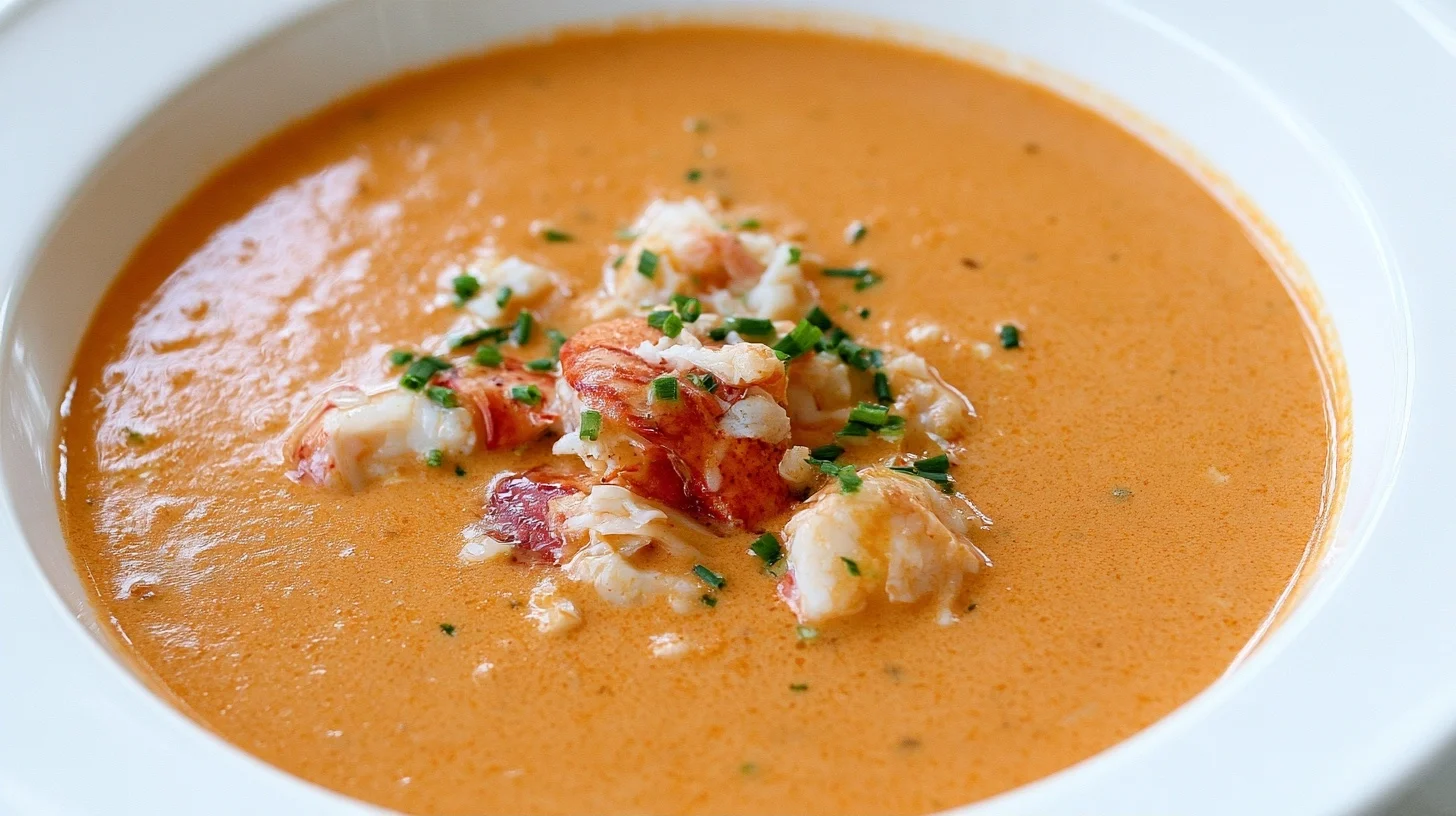
Lobster Bisque Recipe
6
servings30
minutes1
hour320
kcalLobster bisque is a rich, creamy soup made by simmering lobster shells in stock, then blending the broth with cream, brandy, and aromatics. The recipe takes 90 minutes and yields 6 servings, with the key technique being a 30-minute shell simmer that extracts deep seafood flavor.
Keep the screen of your device on
Ingredients
2 whole lobsters
4 cups fish stock or seafood stock
3 tablespoons butter
1 medium onion
2 medium carrots
2 ribs celery
2 cloves garlic
2 tablespoons tomato paste
1/4 cup brandy or cognac
3 tablespoons all-purpose flour
1 cup heavy cream
1 teaspoon salt
Directions
- Remove the lobster meat from the cooked lobsters and chop it into 1/2-inch pieces. Set the meat aside. Break the shells into large pieces with your hands or kitchen shears.
- Heat 1 tablespoon of butter in a large pot over medium heat. Add the onion, carrots, and celery. Cook for 5 to 6 minutes, stirring occasionally, until the vegetables soften and the onion turns translucent.
- Stir in the garlic and tomato paste and cook for 1 minute until fragrant. Add the lobster shells and stock. Bring to a boil, then reduce the heat to low. Simmer for 30 minutes. The liquid will turn a deep orange-red.
- Strain the stock through a fine-mesh strainer into a large bowl, pressing the solids firmly to extract all the liquid. Discard the shells and vegetables. You should have about 4 cups of strained stock.
- Melt the remaining 2 tablespoons of butter in the same pot over medium heat. Whisk in the flour and cook for 2 to 3 minutes, stirring constantly, until the mixture smells nutty and bubbles gently. This is the roux.
- Gradually whisk in the strained stock, pouring it in slowly to avoid lumps. Bring the mixture to a simmer and cook for 5 minutes, stirring often, until it thickens slightly.
Notes
- Simmering the lobster shells for the full 30 minutes extracts the flavor compounds that give this bisque its deep, concentrated seafood taste.
- If the bisque is too thin, whisk 1 tablespoon of softened butter with 1 tablespoon of flour into a paste and stir it into the simmering bisque. Cook for 3 to 4 minutes until thickened.
- Store the bisque in an airtight container in the refrigerator for up to 3 days. Thin it with 1/4 to 1/2 cup of stock or cream when reheating. Substitute half-and-half for heavy cream to make a lighter bisque with less richness.
Nutrition Facts
- Serving Size: 1 g
- Total number of serves: 6
- Calories: 320kcal
- Fat: 20g
- Carbohydrates: 14g
- Net Carbs: 12g
- Fiber: 2g
- Protein: 18g
Did you make this recipe?
Tag @therecipemasterblog on Instagram and hashtag it with #therecipemaster
Like this recipe?
Follow @therecipemasterblog on Pinterest
Follow us on Facebook!
Follow The Recipe Master on Facebook
The sections below cover the key ingredients for this lobster bisque recipe, how to get the texture and flavor right, and what to do when the bisque turns out too thin or too thick.
Key Ingredients and Substitutions
These ingredients shape the flavor and texture of the bisque.
- Whole lobsters: Use live lobsters or pre-cooked whole lobsters with shells. The shells give the bisque its flavor. Lobster tails work but produce a lighter broth since you lose the body shells. Expect about 1 cup of cooked meat from two 1.5 pound lobsters.
- Heavy cream: Creates the bisque’s signature richness and smooth mouthfeel. Half-and-half makes a lighter bisque with less body. The fat in heavy cream also prevents curdling when you add the brandy.
- Brandy or cognac: Adds a warm, slightly sweet depth that enhances the lobster’s natural sweetness. Dry sherry or dry white wine work as substitutes, but the bisque will taste less complex.
- Tomato paste: Contributes umami and a subtle tang that balances the cream. Use 2 tablespoons for a traditional bisque. More than that and the tomato flavor dominates.
- Fish stock or seafood stock: Reinforces the ocean flavor. Chicken stock works in a pinch but produces a milder bisque. Avoid vegetable stock, which lacks the savory backbone this dish needs.
- Butter and flour: Form a roux that thickens the bisque. The roux cooks for 2 to 3 minutes to remove the raw flour taste. Cornstarch slurry can thicken in a pinch but won’t add the same richness.
How to Get Lobster Bisque Right
Follow these steps to achieve the smooth texture and concentrated flavor lobster bisque is known for.
- Simmer the shells long enough: Cook the lobster shells in the stock for 30 minutes at a gentle simmer. You’ll see the liquid turn a deep orange-red. This step extracts the flavor compounds locked in the shells. Less than 20 minutes leaves the broth weak.
- Strain twice: Pour the bisque through a fine-mesh strainer after blending, then again after adding the cream. Shell fragments and vegetable bits turn the bisque gritty if left in. Press the solids with a spoon to extract all the liquid.
- Cook the roux until it smells nutty: Whisk the flour and butter over medium heat for 2 to 3 minutes. The mixture should bubble gently and smell toasted, not raw. A pale roux leaves a floury aftertaste in the finished bisque.
- Add cream off the heat: Remove the pot from the burner before stirring in the heavy cream. High heat can cause the cream to curdle, especially with the acidity from the tomato paste and brandy. Reheat gently after the cream is fully incorporated.
- Dice the lobster meat small: Cut the cooked lobster into 1/2-inch pieces. Larger chunks make the bisque harder to eat with a spoon. Stir the lobster in during the last 2 minutes of cooking so it stays tender.
Make Ahead and Reheat
Make the bisque through the straining step up to 2 days ahead. Store it in the refrigerator without the lobster meat. Reheat gently on the stove over low heat, add the cream, then stir in the lobster meat during the last 2 minutes. The bisque thickens as it sits, so thin it with 1/4 to 1/2 cup of stock or cream when reheating.
What Went Wrong
Why Is the Bisque Too Thin?
The roux did not cook long enough or the ratio of liquid to thickener is off. Whisk 1 tablespoon of softened butter with 1 tablespoon of flour in a small bowl. Whisk this paste into the simmering bisque and cook for 3 to 4 minutes until it thickens. Next time, cook the roux for the full 3 minutes and measure the stock carefully.
Why Is the Bisque Gritty?
Shell fragments or vegetable solids were not strained out. Pour the bisque through a fine-mesh strainer lined with cheesecloth. Press the solids firmly to recover the liquid. The bisque should be completely smooth. Always strain after blending and again after adding the cream.
Why Did the Cream Curdle?
The bisque was too hot when you added the cream, or the heat was too high afterward. Remove the pot from the burner and let it cool for 2 minutes before stirring in the cream. Reheat over low heat, stirring constantly. Do not let the bisque boil once the cream is in. If it has already curdled, blend it again with an immersion blender to smooth it out.
Lobster Bisque Recipe Variations
Shrimp Bisque
Replace the lobster with 1.5 pounds of shell-on shrimp. Peel and devein the shrimp, then simmer the shells in the stock for 20 minutes. Chop the cooked shrimp and add it at the end. The bisque will taste slightly sweeter and less rich than lobster bisque.
Crab Bisque
Use 1 pound of lump crab meat and 2 to 3 crab bodies or shells. Simmer the shells for 30 minutes, strain, and stir in the crab meat at the end. Crab bisque has a more delicate flavor than lobster and pairs well with Old Bay seasoning.
Dairy-Free Version
Replace the heavy cream with full-fat coconut milk. Use olive oil instead of butter in the roux. The bisque will have a subtle coconut undertone and a thinner consistency. Add 1 extra tablespoon of flour to the roux to compensate for the lower fat content.
What to Serve With Lobster Bisque
Lobster bisque is rich, so pair it with something crisp or light. Serve it with crusty French bread or garlic crostini for dipping. A simple green salad with lemon vinaigrette balances the cream. For a fuller meal, follow the bisque with grilled fish or roasted chicken. Lobster mac and cheese uses the same sweet lobster flavor in a baked pasta dish when you want a more casual main course.
How to Store and Reheat Lobster Bisque
Lobster bisque keeps for 3 days in the refrigerator in an airtight container. Let it cool completely before sealing. The bisque thickens as it chills, so stir in 1/4 to 1/2 cup of stock or cream when reheating.
Reheat the bisque in a saucepan over low heat for 5 to 7 minutes, stirring often. Do not boil it or the cream may separate. Lobster bisque does not freeze well because the cream breaks when thawed, leaving a grainy texture. For more information on lobster’s nutritional profile and how to select quality lobster, see the Healthline lobster nutrition guide.
Lobster Bisque Recipe FAQs
Yes, frozen lobster tails work for this lobster bisque recipe. Thaw them completely, then cook and remove the meat. Simmer the shells in the stock for 30 minutes. The bisque will have slightly less depth than one made with whole live lobsters.
Thicken lobster bisque by whisking 1 tablespoon of softened butter with 1 tablespoon of flour into a paste. Stir the paste into the simmering bisque and cook for 3 to 4 minutes. The bisque will thicken as it cooks.
A bisque is strained to remove solids and thickened with a roux, creating a smooth, creamy texture. Regular soup often contains chunky vegetables and is not always pureed. A lobster bisque recipe also uses the shells to build concentrated seafood flavor.
Yes, replace the heavy cream with full-fat coconut milk for a dairy-free version. The bisque will be thinner and have a subtle coconut flavor. Add 1 extra tablespoon of flour to the roux to help thicken it.







Leave a Reply