

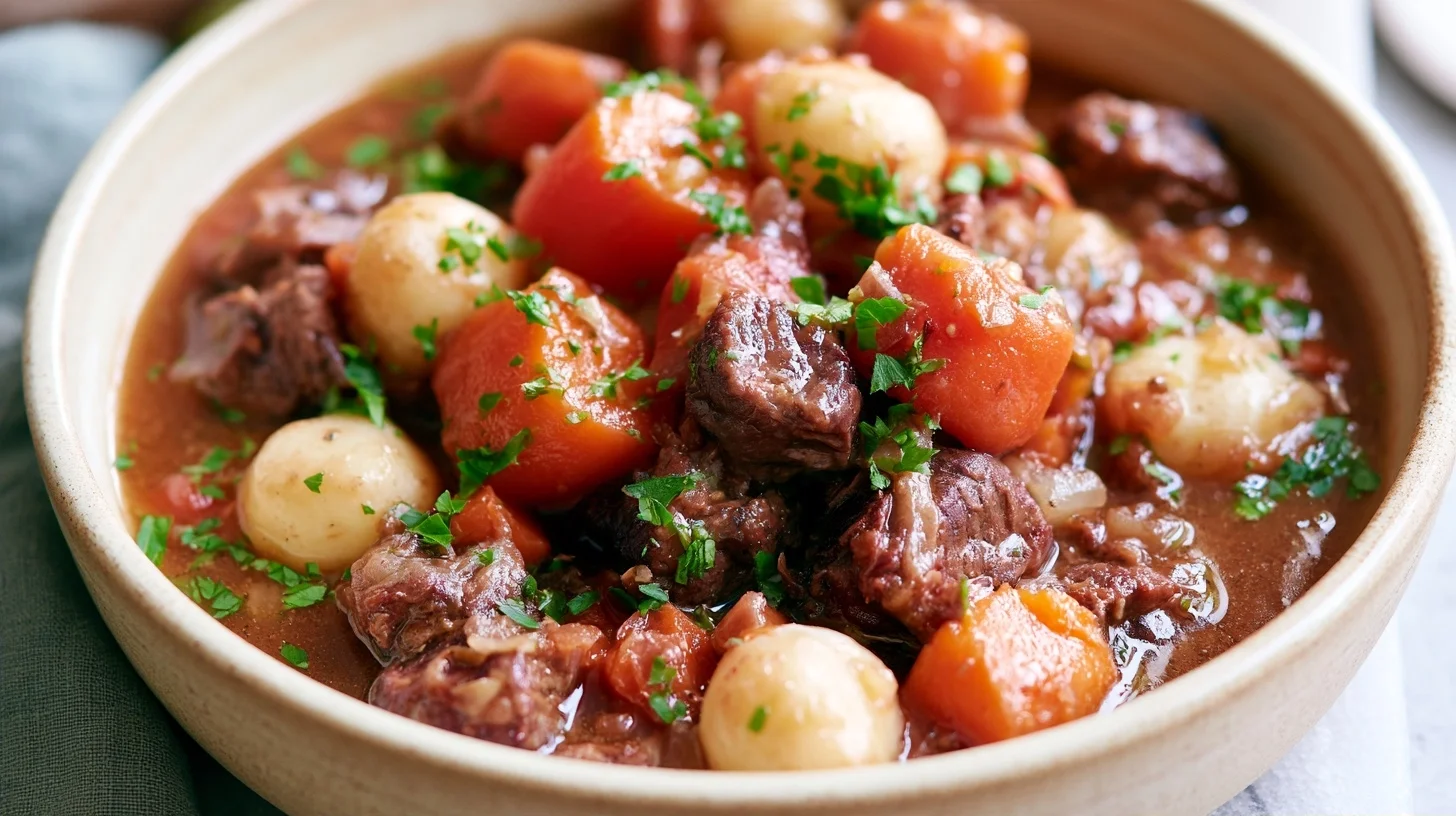
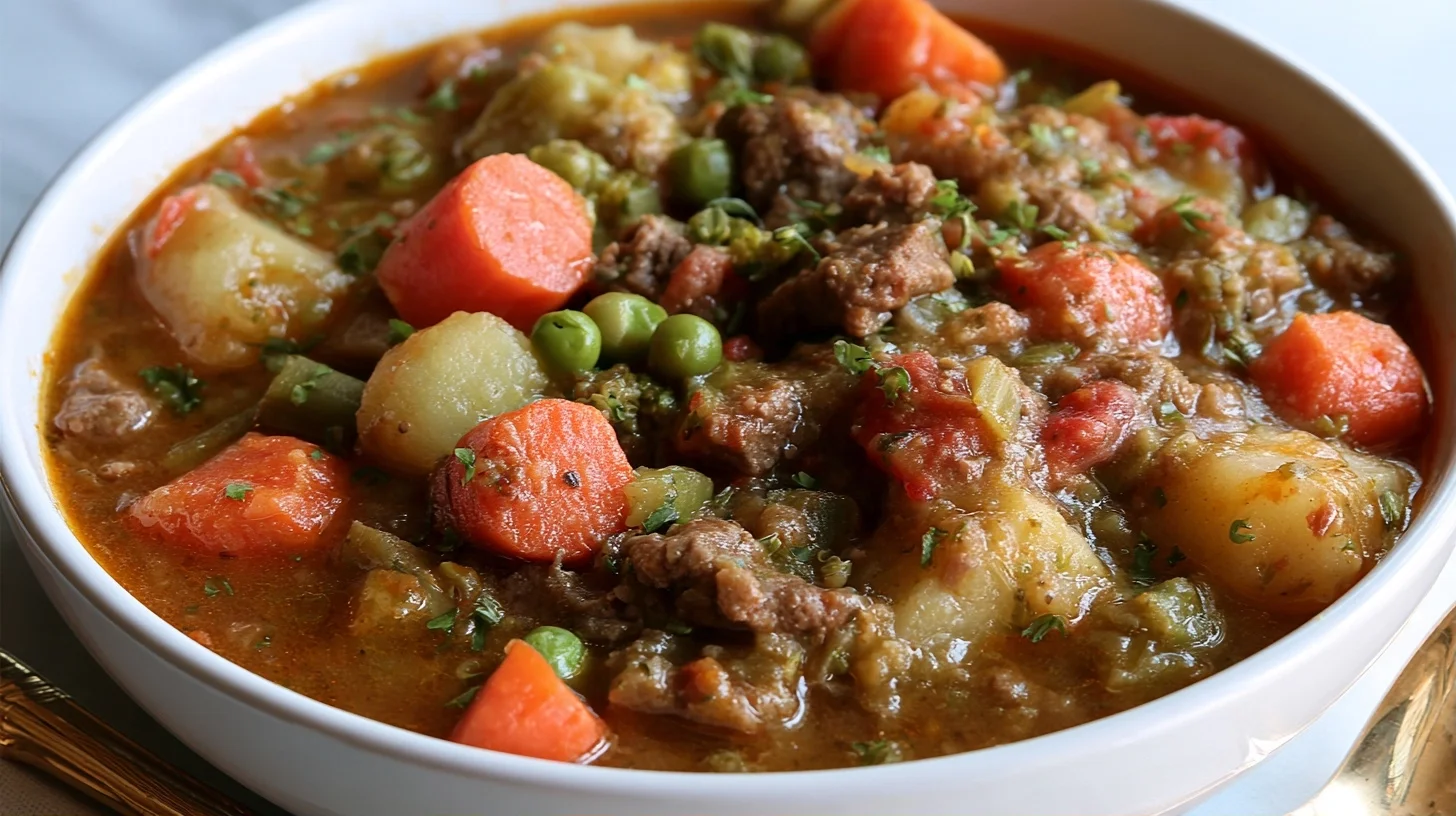
This beef bourguignon recipe is a French red wine braised beef stew with tender chunks of beef, pearl onions, mushrooms, and bacon in a rich sauce. The beef cooks low and slow until it falls apart with a fork, and the wine reduces to a deep, glossy coating.
The recipe takes 3 hours total with 30 minutes of prep. It serves 6 and relies on a long braise at 325°F to break down the beef into melt-in-your-mouth pieces. You can make it a day ahead, and the flavors deepen overnight in the refrigerator.
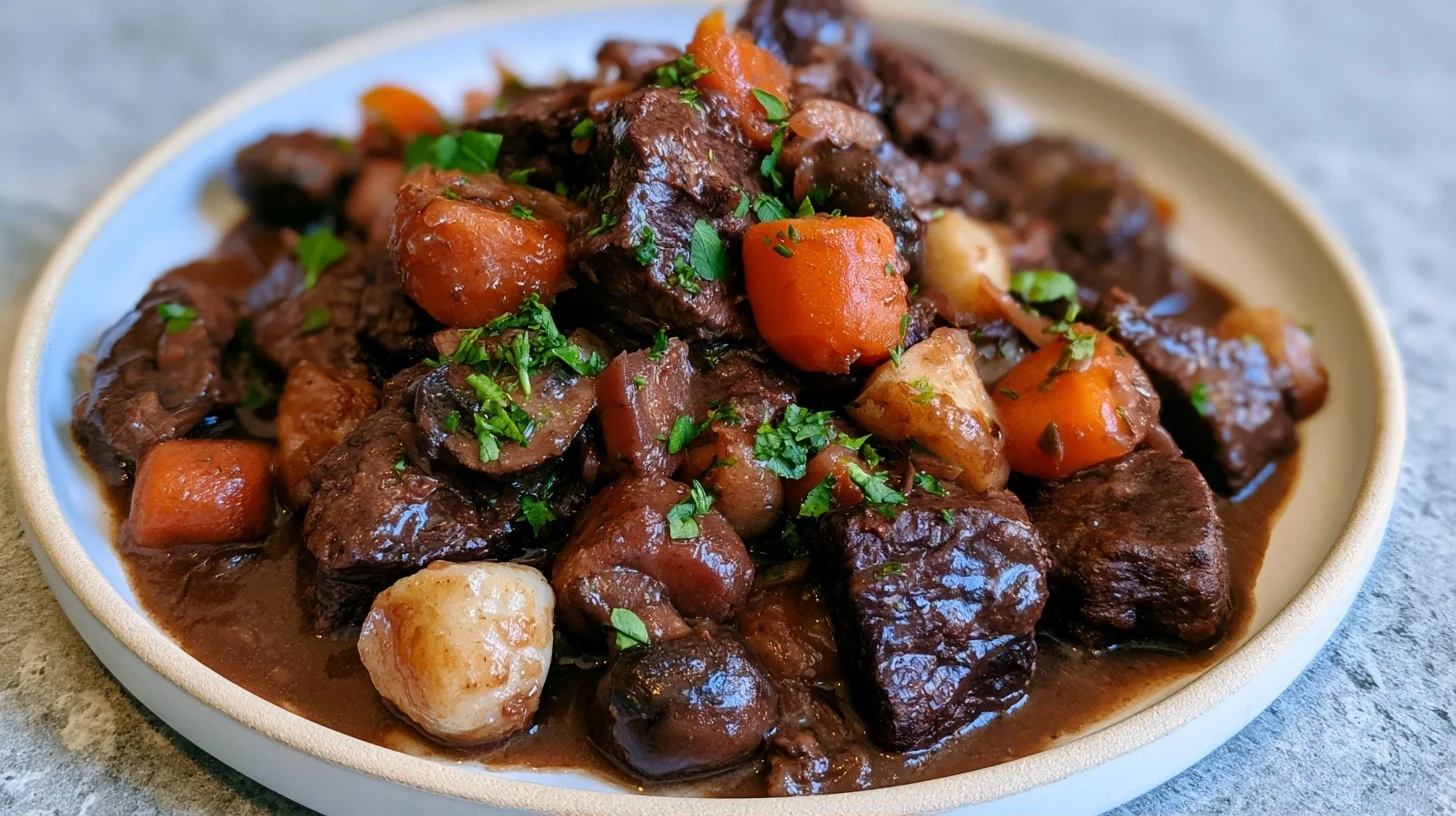
Table of contents
Why This Beef Bourguignon Recipe Works
- Searing the beef in batches at high heat creates a caramelized crust that adds deep flavor to the sauce.
- A full bottle of dry red wine provides acidity to tenderize the beef and balance the richness during the long braise.
- Braising at 325°F for 2.5 hours turns tough chuck roast into tender pieces without drying them out.
- Bacon adds smoky depth, and its rendered fat is used to cook the vegetables for this bourguignon recipe.
Beef Bourguignon Recipe
Beef Bourguignon Recipe
6
servings30
minutes2
hours30
minutes485
kcalBeef bourguignon is a French red wine braised beef stew with tender chunks of beef, pearl onions, mushrooms, and bacon in a rich sauce. The recipe takes 3 hours total with a 2.5 hour braise at 325°F, and the beef becomes fork-tender while the wine reduces to a glossy coating.
Keep the screen of your device on
Ingredients
3 pounds beef chuck roast
6 ounces thick-cut bacon
1 bottle dry red wine
2 cups beef broth
2 tablespoons tomato paste
8 ounces pearl onions
8 ounces cremini mushrooms
3 cloves garlic
2 tablespoons all-purpose flour
2 sprigs fresh thyme
2 bay leaves bay leaves
2 tablespoons olive oil
Directions
- Preheat the oven to 325°F. Pat the beef cubes completely dry with paper towels and season with 1 teaspoon of salt and 1/2 teaspoon of black pepper.
- Cook the bacon in a large Dutch oven over medium heat for 6 to 8 minutes, stirring occasionally, until crisp and browned. Transfer the bacon to a plate with a slotted spoon, leaving the fat in the pot.
- Sear the beef in batches in the bacon fat over medium-high heat, adding 1 tablespoon of olive oil if needed. Cook 6 to 8 pieces at a time for 2 to 3 minutes per side until deeply browned on all sides. Transfer each batch to the plate with the bacon.
- Sauté the onions and mushrooms in the same pot over medium heat for 5 to 6 minutes, stirring occasionally, until the mushrooms release their liquid and begin to brown. Add the garlic and cook for 1 minute until fragrant.
- Stir in the flour and tomato paste and cook for 1 minute, stirring constantly, until the flour coats the vegetables and no raw flour remains.
- Add the wine and bring to a boil, scraping up any browned bits from the bottom of the pot with a wooden spoon. Boil for 5 minutes until the wine reduces by about one third.
Notes
- Beef bourguignon tastes even better the next day after the flavors have had time to meld, so make it a day ahead and reheat gently before serving.
- If the beef is tough after 2.5 hours, return the pot to the oven and braise for another 30 minutes. Insufficient braising time is the most common cause of tough meat.
- Store beef bourguignon in an airtight container in the refrigerator for 4 to 5 days. Substitute frozen pearl onions to save prep time, and use them straight from the freezer without thawing.
Nutrition Facts
- Serving Size: 1 g
- Total number of serves: 6
- Calories: 485kcal
- Fat: 24g
- Carbohydrates: 14g
- Fiber: 2g
- Protein: 42g
Did you make this recipe?
Tag @therecipemasterblog on Instagram and hashtag it with #therecipemaster
Like this recipe?
Follow @therecipemasterblog on Pinterest
Follow us on Facebook!
Follow The Recipe Master on Facebook
The sections below cover the key ingredients for beef bourguignon, the tips that prevent tough meat or thin sauce, and the fixes for the most common problems.
Key Ingredients and Substitutions
These ingredients shape the flavor and texture of beef bourguignon.
- Chuck roast: This cut has enough fat and connective tissue to stay moist during the long braise. Substitute stew meat if it is already cut into 2 inch pieces, but avoid lean cuts like sirloin, which dry out.
- Dry red wine: Use a full-bodied wine like Burgundy, Pinot Noir, or Côtes du Rhône. The wine tenderizes the beef and reduces into the sauce. Substitute beef broth if you cannot use wine, but the sauce will lack acidity and depth.
- Bacon: Thick-cut bacon adds smoky flavor and renders fat for sautéing. Substitute pancetta for a milder taste, or leave it out and use 3 tablespoons of olive oil instead.
- Pearl onions: These small onions stay intact and sweet during braising. Substitute frozen pearl onions to skip the peeling step, or use shallots cut into quarters.
- Tomato paste: Two tablespoons add umami and help thicken the sauce. Substitute an equal amount of tomato sauce, but the sauce will be slightly thinner.
- Beef broth: Low-sodium broth gives you control over the salt level. Substitute chicken broth or water, but beef broth deepens the meaty flavor.
How to Get Beef Bourguignon Right
These steps control the texture and flavor of your beef bourguignon recipe.
- Dry the beef before searing: Pat the beef cubes completely dry with paper towels. Wet beef steams instead of browning, and you lose the caramelized crust that flavors the sauce.
- Sear in batches: Crowding the pan drops the temperature and causes the beef to release water. Sear 6 to 8 pieces at a time over medium-high heat for 2 to 3 minutes per side until deeply browned.
- Simmer, do not boil: Once the pot goes into the oven, the liquid should bubble gently around the edges. Boiling at temperatures above 325°F toughens the meat and evaporates too much liquid.
- Check tenderness at 2 hours: Insert a fork into a piece of beef. It should slide in with no resistance and the meat should pull apart easily. If it still feels firm, braise for another 30 minutes.
- Reduce the sauce uncovered: After the beef is tender, simmer the sauce on the stovetop for 10 to 15 minutes without a lid. Stop when it coats the back of a spoon and no longer runs off immediately.
Slow Cooker Method
Sear the beef and cook the bacon and vegetables on the stovetop as directed. Transfer everything to a slow cooker and cook on low for 6 to 7 hours or on high for 3 to 4 hours. The beef is ready when it pulls apart with a fork. Transfer the solids to a serving dish, then pour the liquid into a saucepan and simmer uncovered for 10 minutes to thicken before pouring it back over the beef.
What Went Wrong
Why Is the Beef Tough?
The beef did not braise long enough to break down the connective tissue. Return the pot to the oven and cook for another 30 to 45 minutes, checking every 15 minutes. Next time, braise for the full 2.5 hours and test with a fork before removing the pot.
Why Is the Sauce Watery?
The sauce did not reduce enough after braising. Transfer the beef and vegetables to a serving dish, then simmer the sauce uncovered on the stovetop over medium heat for 10 to 15 minutes. Stir occasionally and stop when the sauce coats a spoon. For a thicker sauce immediately, whisk 1 tablespoon of cornstarch with 2 tablespoons of cold water and stir it into the simmering liquid.
Why Does the Sauce Taste Harsh?
The wine did not cook long enough to mellow its acidity. Simmer the sauce on the stovetop for an additional 10 minutes, then taste again. Stir in 1 teaspoon of sugar to balance the acidity if it still tastes sharp. Next time, let the wine reduce by half before adding the broth.
Recipe Variations
Chicken Bourguignon
Substitute 3 pounds of bone-in, skin-on chicken thighs for the beef. Sear the chicken skin side down for 5 minutes until golden, then braise for 45 to 50 minutes at 325°F. The chicken is done when it reaches 165°F on a meat thermometer. The sauce will be lighter and the cooking time is much shorter.
Mushroom-Heavy Version
Increase the mushrooms to 1 pound and use a mix of cremini, shiitake, and oyster mushrooms. Sauté them in batches so they brown instead of steam. The extra mushrooms add more earthy flavor and make the dish more filling.
White Wine Bourguignon
Substitute a dry white wine like Chardonnay or Sauvignon Blanc for the red wine. The sauce will be lighter in color and more delicate in flavor. Use the same amount and follow the same steps.
Another tasty beef recipe that you should try is the Braised Meat in Rich Tomato Sauce recipe.
What to Serve With Beef Bourguignon
Serve beef bourguignon over egg noodles, mashed potatoes, or crusty bread to soak up the sauce. Pair it with a simple green salad dressed with vinaigrette to cut the richness, or roasted green beans for a vegetable side. A glass of the same red wine you used in the recipe complements the dish.
How to Store and Reheat Beef Bourguignon
Beef bourguignon keeps for 4 to 5 days in the refrigerator in an airtight container. The flavors deepen after a day, so it tastes even better as leftovers. Freeze it for up to 3 months in a freezer-safe container, leaving 1 inch of headspace for expansion. Thaw overnight in the refrigerator before reheating.
Reheat on the stovetop over medium-low heat for 10 to 15 minutes, stirring occasionally, until warmed through. Add a splash of beef broth or water if the sauce has thickened too much. You can also reheat individual portions in the microwave for 2 to 3 minutes, stirring halfway through.
Beef Bourguignon Recipe FAQs
Yes, beef bourguignon tastes better when made a day ahead. The flavors deepen as it sits. Cool it completely, then refrigerate for up to 4 days. Reheat gently on the stovetop before serving.
Chuck roast is the best cut for beef bourguignon. It has enough fat and connective tissue to stay moist during the long braise. Stew meat works if it is already cut into 2 inch pieces.
Wine is traditional and adds acidity that tenderizes the beef. You can substitute beef broth if you cannot use wine. The sauce will be less complex and lack the depth that red wine provides.
Simmer the sauce uncovered on the stovetop for 10 to 15 minutes after braising. It thickens as the liquid reduces. For a faster fix, whisk 1 tablespoon of cornstarch with 2 tablespoons of cold water and stir it into the simmering sauce.







Leave a Reply