

This tuna noodle casserole recipe delivers creamy comfort in under an hour with egg noodles, canned tuna, a simple white sauce, and a buttery breadcrumb topping. It bakes at 375°F for 25 minutes until the top turns golden and the edges bubble.
The recipe takes 45 minutes from start to finish and serves 6. Success comes down to draining the tuna well so the sauce stays thick. You can assemble the casserole up to 24 hours ahead and refrigerate it unbaked.
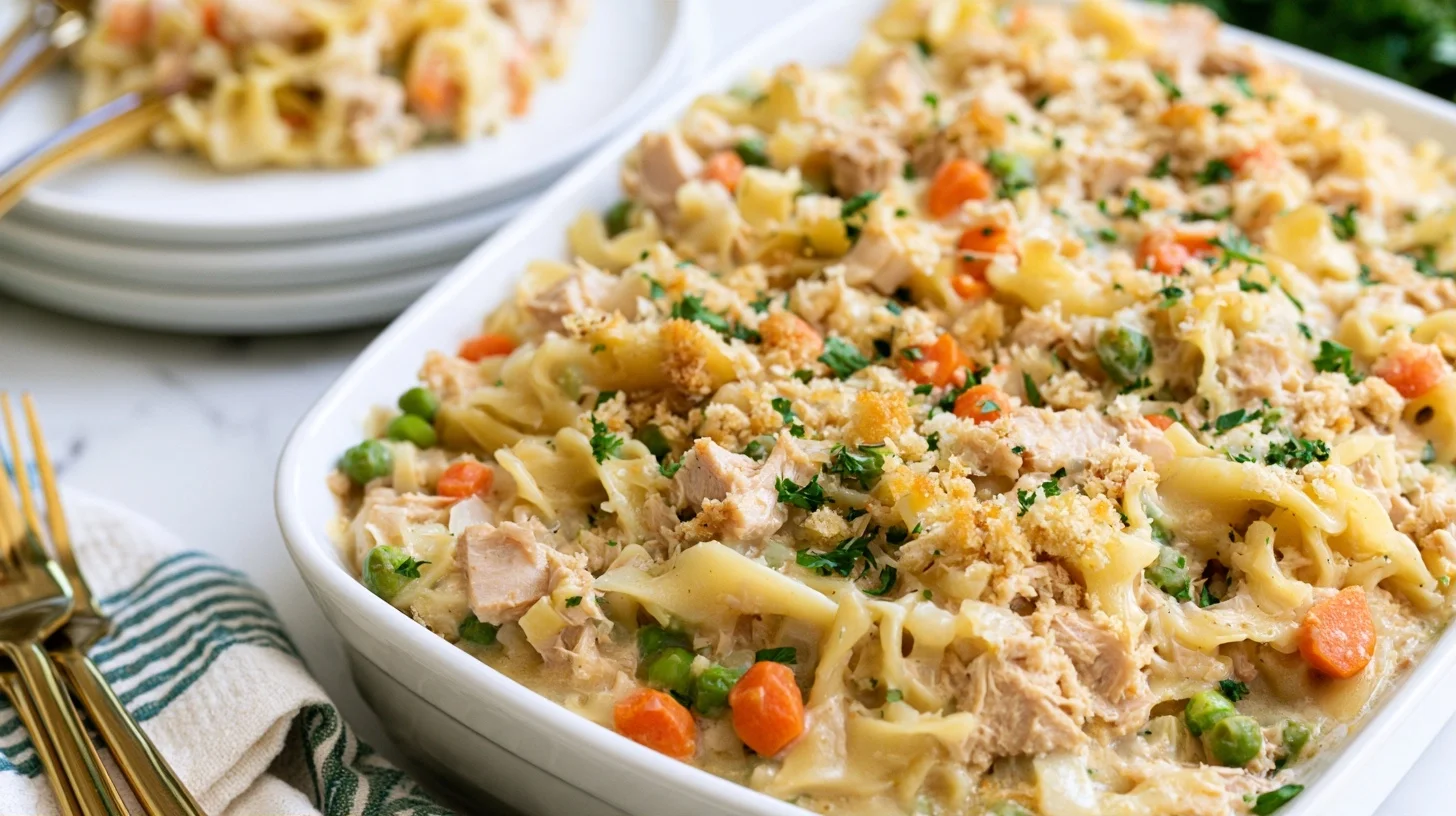
Table of contents
Why This Tuna Noodle Casserole Recipe Works
- Cooking the noodles 2 minutes under package time keeps them from turning mushy during the 25 minute bake.
- A roux made from 3 tablespoons each of butter and flour creates a thick sauce that coats every noodle in the casserole recipe without pooling at the bottom.
- Panko breadcrumbs mixed with melted butter brown faster and stay crispier than plain breadcrumbs.
Tuna Noodle Casserole Recipe
Tuna Noodle Casserole Recipe
6
servings15
minutes30
minutes385
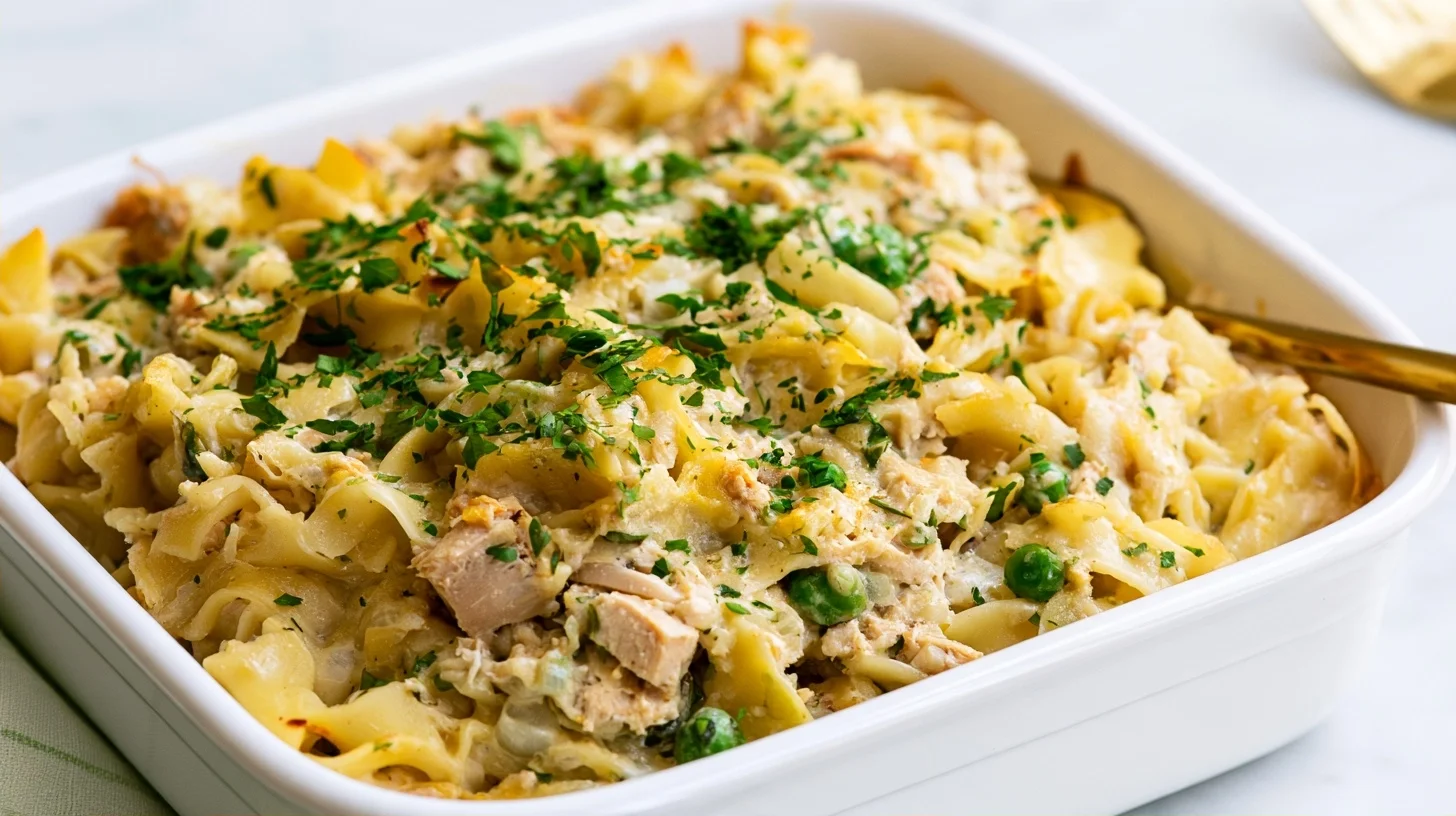
kcalTuna noodle casserole combines egg noodles, canned tuna, peas, and a creamy white sauce under a buttery breadcrumb topping. The dish takes 45 minutes from start to finish and bakes at 375°F until golden and bubbly.
Keep the screen of your device on
Ingredients
12 ounces wide egg noodles
3 tablespoons butter
3 tablespoons all-purpose flour
2 cups whole milk
2 cans tuna packed in water
1 cup frozen peas
1 teaspoon salt
0.5 teaspoon black pepper
0.5 teaspoon garlic powder
1 cup panko breadcrumbs
2 tablespoons butter
Directions
- Preheat the oven to 375°F and grease a 9×13 inch baking dish with butter or cooking spray.
- Boil the egg noodles in salted water for 2 minutes less than the package directions state. Drain them well and set aside. They should be firm to the bite.
- Melt 3 tablespoons butter in a large saucepan over medium heat. Add the flour and whisk constantly for 2 minutes until the mixture smells nutty. This cooks out the raw flour taste.
- Add the milk slowly in 3 additions, whisking after each until smooth. Cook for 3 to 4 minutes, stirring frequently, until the sauce thickens enough to coat the back of a spoon.
- Stir in the salt, pepper, and garlic powder. Remove the pan from the heat.
- Fold in the drained tuna, frozen peas, and cooked noodles until everything is evenly coated with sauce. Press the tuna in a strainer first to remove all excess water.
Notes
- Boiling the egg noodles 2 minutes under package time keeps them from turning mushy during the 25 minute bake.
- If the sauce looks watery after mixing, stir in 1 tablespoon flour mixed with 2 tablespoons milk before baking. Wet tuna is the usual cause.
- The casserole keeps for 3 to 4 days refrigerated in an airtight container. Substitute penne or rotini for egg noodles, but the dish will be slightly drier.
Nutrition Facts
- Serving Size: 1 g
- Total number of serves: 6
- Calories: 385kcal
- Fat: 12g
- Carbohydrates: 44g
- Fiber: 3g
- Protein: 24g
Did you make this recipe?
Tag @therecipemasterblog on Instagram and hashtag it with #therecipemaster
Like this recipe?
Follow @therecipemasterblog on Pinterest
Follow us on Facebook!
Follow The Recipe Master on Facebook
The sections below explain which tuna and noodles work best for this casserole recipe, how to fix a watery sauce, and how to store leftovers for up to 4 days.
Key Ingredients and Substitutions
Five ingredients control the texture and flavor of this casserole.
- Canned tuna: Use tuna packed in water and drain it completely. Oil packed tuna adds grease to the sauce. Albacore has a milder flavor than chunk light.
- Egg noodles: Wide egg noodles hold the sauce better than thin ones. Substitute penne or rotini, but the casserole will be slightly drier because those shapes trap less sauce.
- Whole milk: Whole milk makes a richer sauce than 2% or skim. Lower fat milk produces a thinner sauce that may separate during baking.
- Frozen peas: Frozen peas stay firm and bright green. Fresh peas turn olive colored after 25 minutes at 375°F. Skip thawing them first.
- Panko breadcrumbs: Panko stays crisp because the flakes are larger and trap less moisture. Regular breadcrumbs work but get softer. Mix them with 2 tablespoons melted butter either way.
How to Get Tuna Noodle Casserole Right
Four steps decide whether the casserole turns out creamy or dry.
- Undercook the noodles: Boil them 2 minutes less than the package says. They finish cooking in the oven. Fully cooked noodles turn mushy after baking.
- Whisk the roux constantly: Stir the flour and butter over medium heat for 2 minutes until it smells nutty. Raw flour tastes pasty. Burnt flour tastes bitter.
- Add milk slowly: Pour the milk into the roux in 3 additions, whisking after each until smooth. Dumping it all at once creates lumps that will not dissolve.
- Drain the tuna twice: Press the tuna in a strainer with the back of a spoon after draining the can. Excess water dilutes the sauce and makes the casserole watery. Tuna noodle casserole stays creamy when the fish is completely dry.
- Bake uncovered: The exposed top lets steam escape and the breadcrumbs brown. Covering the dish traps moisture and softens the topping.
What Went Wrong
Why Is the Sauce Watery?
The tuna or noodles released too much liquid. Press the drained tuna firmly in a strainer before adding it. Drain the cooked noodles well and shake the colander to remove clinging water. If the assembled casserole looks thin, stir in 1 tablespoon of flour mixed with 2 tablespoons of milk before baking.
Why Is the Top Pale?
The oven temperature was too low or the butter was skipped. Check that your oven reaches 375°F with an oven thermometer. Toss the panko with melted butter before sprinkling it on top. Dry breadcrumbs do not brown as well. For deeper color, broil the finished casserole for 1 to 2 minutes.
Why Are the Noodles Mushy?
The noodles were fully cooked before baking. Boil them only 2 minutes under the package time. They absorb sauce and finish cooking in the oven. Overcooked noodles cannot be fixed, but you can prevent it in the next batch by setting a timer.
Recipe Variations
Mushroom Tuna Casserole
Add 8 ounces sliced mushrooms sautéed in 1 tablespoon butter until golden, about 5 minutes. Fold them into the sauce with the tuna. Mushrooms add an earthy flavor and make the casserole more filling.
Cheesy Tuna Casserole
Stir 1 cup shredded cheddar or Gruyere into the hot sauce until melted. The cheese makes the sauce richer and adds a sharp tang. Add 2 minutes to the bake time if the casserole goes into the oven cold.
Chip Topping
Replace the panko with 2 cups crushed potato chips or crackers. The chips add salt and crunch. Skip the extra salt in the sauce if you use salted chips.
Finally, i would like to suggest the old-fashioned tuna casserole recipe.
What to Serve With Tuna Noodle Casserole
Serve the casserole with a green salad dressed in vinaigrette, roasted green beans, or steamed broccoli. The acidity and crunch balance the creamy noodles. Garlic bread works for a heavier meal.
How to Store and Reheat Leftovers
Tuna noodle casserole keeps for 3 to 4 days in the refrigerator in an airtight container or covered tightly with foil. Freeze individual portions in freezer safe containers for up to 2 months. Thaw overnight in the refrigerator before reheating.
Reheat single servings in the microwave on 50% power for 2 to 3 minutes, stirring halfway through. Reheat larger portions covered with foil at 350°F for 20 minutes. The sauce may look broken when cold but smooths out when heated. Assemble the unbaked casserole up to 24 hours ahead, cover, and refrigerate. Add 10 minutes to the bake time if it goes into the oven cold.
Tuna Noodle Casserole FAQs
Yes, penne or rotini work in place of egg noodles. The casserole will be slightly drier because those shapes trap less sauce than wide egg noodles.
No, add frozen peas directly to the casserole. They thaw and cook through during the 25 minute bake. Thawed peas release extra water.
Use solid white albacore tuna packed in water for the mildest flavor. Chunk light tuna works but has a stronger taste. Drain either type completely before adding.
Yes, assemble the unbaked casserole up to 24 hours ahead. Cover and refrigerate it. Add 10 minutes to the bake time if it goes into the oven cold.






Leave a Reply