

This jambalaya recipe delivers smoky, spicy Louisiana flavor in one pot with tender chicken, andouille sausage, and perfectly cooked rice. The dish is ready in 50 minutes and feeds 6 people with minimal cleanup.
The key to jambalaya is building layers of flavor by browning the meat first, then cooking the rice directly in the broth so it absorbs every bit of seasoning. Jambalaya keeps for 4 days in the refrigerator and reheats beautifully, making it ideal for meal prep.
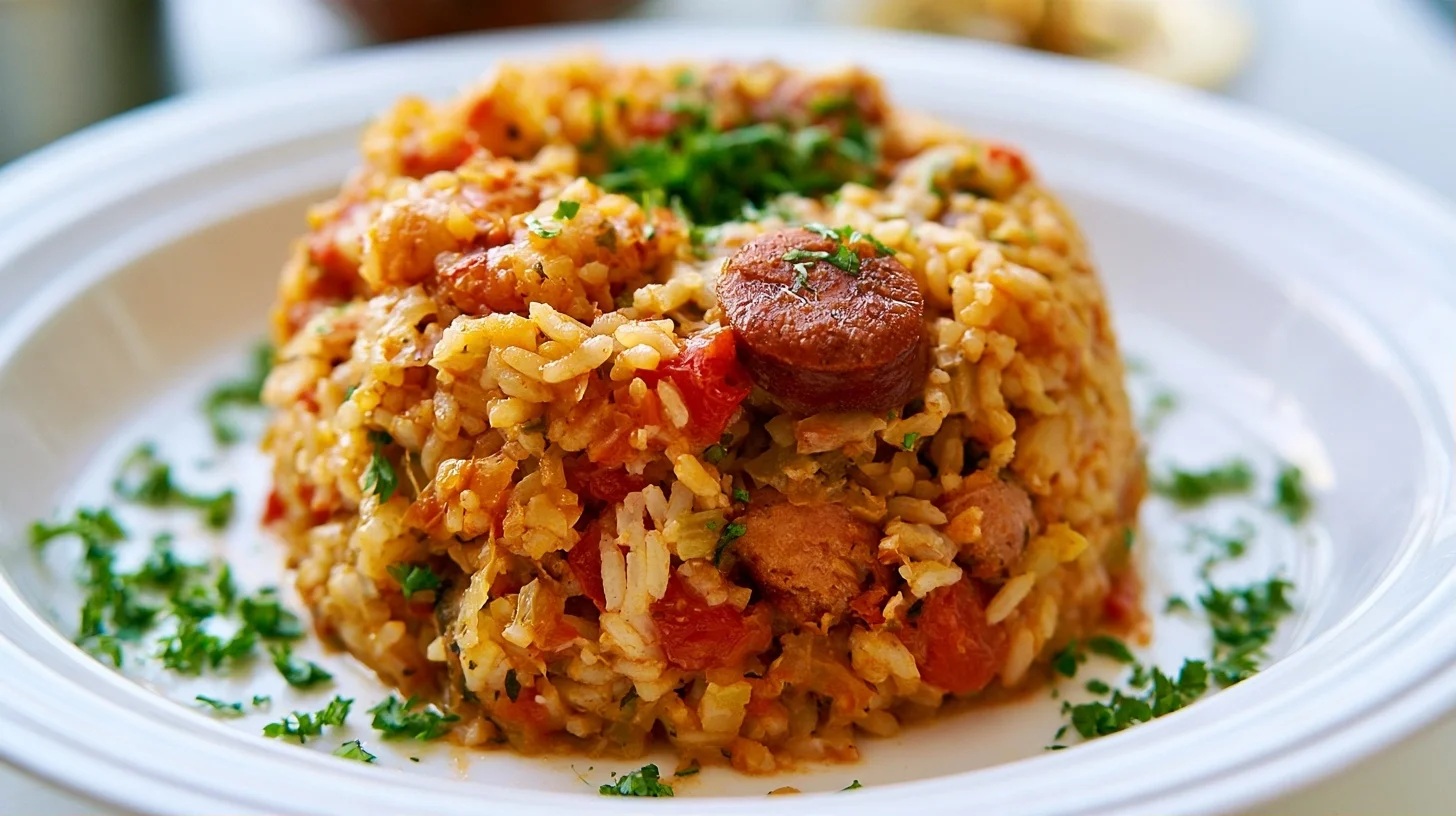
Table of contents
Why This Jambalaya Recipe Works
- Browning the chicken and sausage first creates a flavorful fond on the pot bottom that seasons the entire dish.
- Cooking the rice in the broth instead of water gives every grain the smoky, spicy jambalaya flavor.
- The 2 to 1 liquid to rice ratio produces tender grains that hold their shape without turning mushy.
Jambalaya Recipe Card
Jambalaya Recipe
6
servings15
minutes35
minutes485
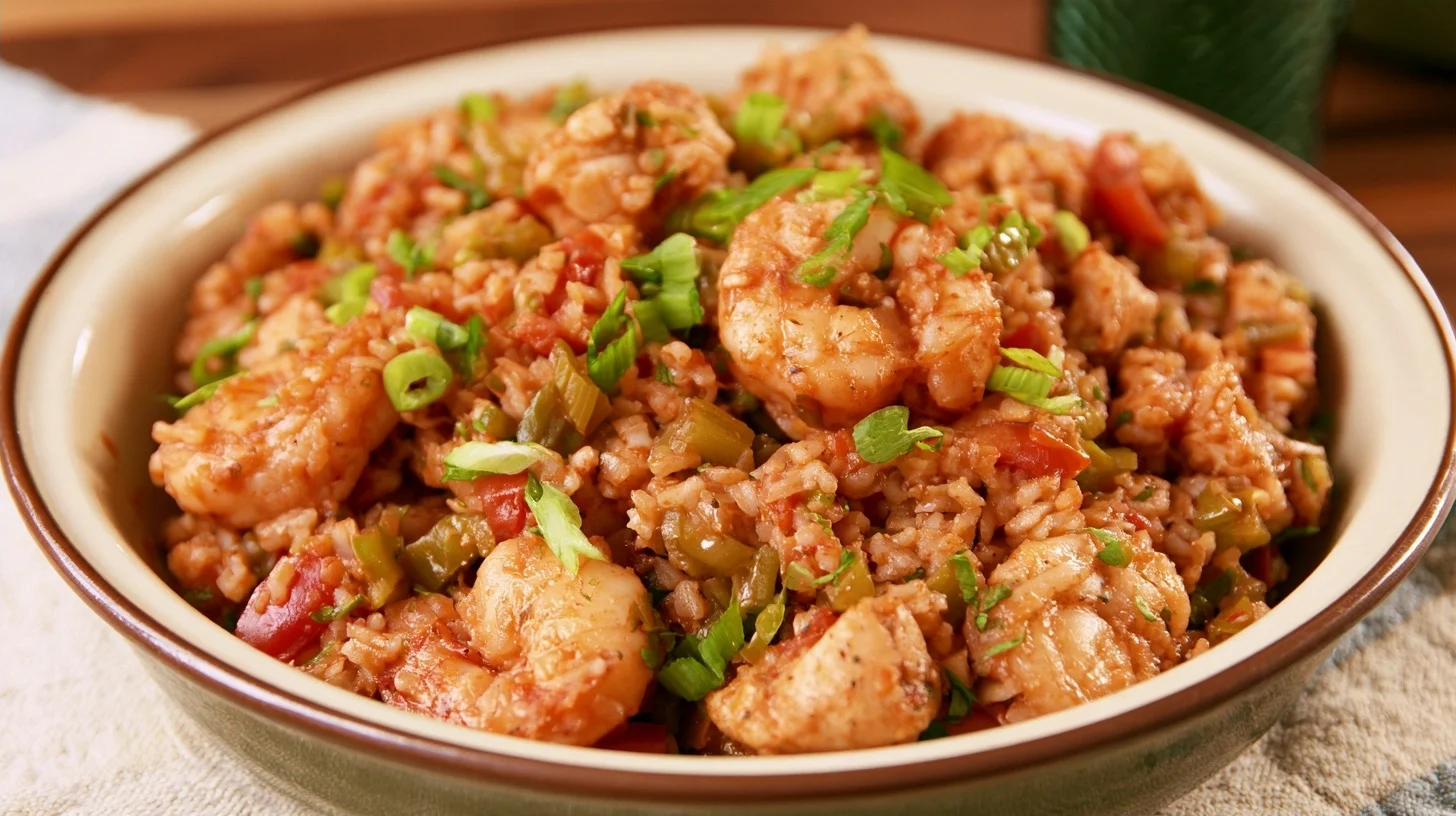
kcalJambalaya is a one-pot Louisiana rice dish with browned chicken, smoky andouille sausage, and Cajun spices cooked together until the rice is tender and flavorful. This recipe takes 50 minutes from start to finish and serves 6 people with minimal cleanup.
Keep the screen of your device on
Ingredients
1 pound boneless skinless chicken thighs
12 ounces andouille sausage
1 tablespoon vegetable oil
1 medium yellow onion
1 medium green bell pepper
2 stalks celery
3 cloves garlic
1.5 cups long grain white rice
3 cups chicken broth
1 can diced tomatoes
2 tablespoons Cajun seasoning
1 teaspoon dried thyme
Directions
- Brown the chicken and sausage in a large heavy pot or Dutch oven over medium-high heat with the vegetable oil for 3 to 4 minutes per side until deeply browned. Transfer the meat to a plate.
- Cook the vegetables in the same pot over medium heat for 5 minutes, stirring occasionally, until the onion is softened and translucent. Add the garlic and cook for 1 minute until fragrant.
- Add the rice, broth, tomatoes, Cajun seasoning, and thyme to the pot and stir once to combine. Scrape the browned bits from the bottom of the pot with a wooden spoon. Bring to a boil over high heat.
- Return the chicken and sausage to the pot, reduce the heat to low, cover tightly, and simmer for 20 minutes without stirring or lifting the lid. The rice is done when all the liquid is absorbed and the grains are tender.
- Remove from heat and let stand covered for 5 minutes. Fluff the jambalaya gently with a fork and serve hot.
Notes
- The 2 to 1 liquid to rice ratio in this jambalaya recipe produces tender grains that hold their shape without turning mushy.
- If the rice turns mushy, you stirred it during cooking or used too much liquid. Spread it on a sheet pan to dry out slightly.
- Jambalaya keeps for 4 days in the refrigerator in an airtight container. Substitute kielbasa for andouille if you want a milder smoke flavor.
Nutrition Facts
- Serving Size: 1 g
- Total number of serves: 6
- Calories: 485kcal
- Fat: 16g
- Carbohydrates: 48g
- Fiber: 3g
- Protein: 32g
Did you make this recipe?
Tag @therecipemasterblog on Instagram and hashtag it with #therecipemaster
Like this recipe?
Follow @therecipemasterblog on Pinterest
Follow us on Facebook!
Follow The Recipe Master on Facebook
This jambalaya recipe is built on authentic Cajun technique, and the sections below cover the ingredient swaps that work, the timing cues that prevent mushy rice, and the fixes for common problems.
Key Ingredients and Substitutions
These ingredients define jambalaya’s smoky, spicy character and its texture.
- Andouille sausage: This smoked Cajun sausage gives jambalaya its signature smoky heat. Substitute kielbasa or smoked Spanish chorizo for a milder smoke flavor, but avoid fresh sausage, which lacks the depth.
- Long grain white rice: Long grain rice stays separate and fluffy when cooked in liquid. Substitute jasmine rice for a slightly softer texture, but avoid short grain or instant rice, which turn sticky or mushy.
- Chicken broth: Broth carries the spices into the rice and adds savory depth. Substitute vegetable broth or water mixed with 1 teaspoon of chicken bouillon per cup, but the dish will taste less rich.
- Cajun seasoning: This blend of paprika, cayenne, garlic, and herbs delivers the heat and complexity. Substitute 1 tablespoon paprika, 1 teaspoon garlic powder, 1 teaspoon onion powder, 1/2 teaspoon cayenne, and 1/2 teaspoon dried thyme for a homemade version.
- Tomatoes: Diced tomatoes add acidity and moisture, balancing the richness of the meat. Substitute crushed tomatoes for a thicker sauce, or omit them entirely for a drier, Creole-style jambalaya.
How to Get Jambalaya Right
These steps control the texture and flavor of your jambalaya.
- Brown the meat in batches: Cook the chicken and sausage in a single layer for 3 to 4 minutes per side until deeply browned. Crowding the pot steams the meat instead of browning it, and you lose the caramelized bits that flavor the rice.
- Scrape the fond: After adding the broth, scrape the browned bits from the pot bottom with a wooden spoon. These bits dissolve into the liquid and season the entire dish.
- Use a 2 to 1 liquid ratio: For every 1 cup of rice, use 2 cups of liquid. This ratio cooks the rice through without leaving it soupy or dry.
- Simmer covered without stirring: Once the rice is added, cover the pot and simmer for 20 minutes without lifting the lid or stirring. Stirring releases starch and turns the rice gummy.
- Rest for 5 minutes: After the rice is tender, remove the pot from the heat and let it sit covered for 5 minutes. The grains firm up and absorb any remaining moisture.
Slow Cooker Method
Brown the chicken and sausage in a skillet, then transfer them to a slow cooker with the vegetables, rice, broth, and seasonings. Cook on low for 3 to 4 hours until the rice is tender. Do not cook longer than 4 hours or the rice will turn mushy.
What Went Wrong
Why Is the Rice Mushy?
The rice turned mushy because you used too much liquid or stirred it during cooking. Stirring releases starch and makes the grains sticky. If the rice is already cooked, spread it on a sheet pan to cool and dry out slightly. Next time, measure the liquid exactly at a 2 to 1 ratio and leave the pot covered without stirring.
Why Is the Rice Still Hard?
The rice stayed hard because the heat was too high and the liquid evaporated before the grains cooked through. Add 1/4 cup of hot broth or water, cover the pot, and simmer for 5 more minutes. Next time, keep the heat at a low simmer and check that the lid fits tightly so steam does not escape.
Why Is the Dish Too Spicy?
The jambalaya is too spicy because the Cajun seasoning or andouille sausage contained more cayenne than expected. Stir in 1/2 cup of diced tomatoes or a splash of cream to mellow the heat. Next time, start with half the Cajun seasoning and taste before adding more.
Recipe Variations
Seafood Jambalaya Recipe
Replace the chicken with 1 pound of peeled shrimp and add them during the last 5 minutes of cooking. Shrimp cook quickly and turn rubbery if simmered too long. The dish tastes lighter and slightly sweeter with seafood.
Vegetarian Version
Omit the chicken and sausage and add 2 cups of diced bell peppers, 1 cup of sliced mushrooms, and 1 can of drained kidney beans. Use vegetable broth and increase the Cajun seasoning by 1 teaspoon to compensate for the missing meat flavor.
Creole-Style Without Tomatoes
Omit the tomatoes entirely and reduce the broth by 1/2 cup. The result is a drier, darker jambalaya with more concentrated spice flavor. This version is traditional in Cajun households and is sometimes called brown jambalaya.
What to Serve With Jambalaya
Jambalaya is a complete meal in one pot, but it pairs well with simple sides that add freshness or crunch. Serve it with a green salad dressed in vinaigrette to cut the richness, or with cornbread to soak up the flavorful liquid. Coleslaw adds a cool, tangy contrast to the spicy rice. For a fuller spread, try pastalaya, which uses the same Cajun flavors but swaps rice for pasta.
How to Store and Reheat Jambalaya
Jambalaya keeps for 4 days in the refrigerator in an airtight container. Let it cool completely before covering to prevent condensation from making the rice soggy. Freeze jambalaya for up to 3 months in a freezer-safe container, but the rice texture softens slightly after thawing.
Reheat jambalaya in a covered skillet over medium-low heat for 5 to 7 minutes, adding 2 tablespoons of water or broth to restore moisture. Stir gently to avoid breaking up the rice. Microwave individual portions in a covered dish for 2 to 3 minutes, stirring halfway through.
Jambalaya Recipe FAQs
Yes, jambalaya tastes even better the next day after the flavors meld. Cook the recipe fully, let it cool, and refrigerate for up to 4 days. Reheat gently with a splash of broth.
Jambalaya is a rice dish cooked in one pot with the liquid absorbed into the grains. Gumbo is a thick stew served over rice. Gumbo uses a roux and has a soupy consistency.
Yes, but brown rice needs more liquid and a longer cooking time. Use 2.5 cups of broth per 1 cup of brown rice and simmer for 40 to 45 minutes. The texture will be chewier.
No, but andouille gives jambalaya its smoky Cajun flavor. Substitute kielbasa or smoked chorizo for similar results. Avoid fresh sausage, which lacks the smoky depth.




Leave a Reply