

A german pancake recipe delivers a dramatic, puffy baked pancake with crisp golden edges and a soft, custard-like center. This oven-baked breakfast rises high in a hot skillet, then falls gently as it cools, creating a shallow bowl perfect for holding toppings.
The dish takes 25 minutes from start to finish and serves 4. Success depends on a preheated 425°F oven and a very hot cast iron or oven-safe skillet that sets the edges immediately while the center bakes through.
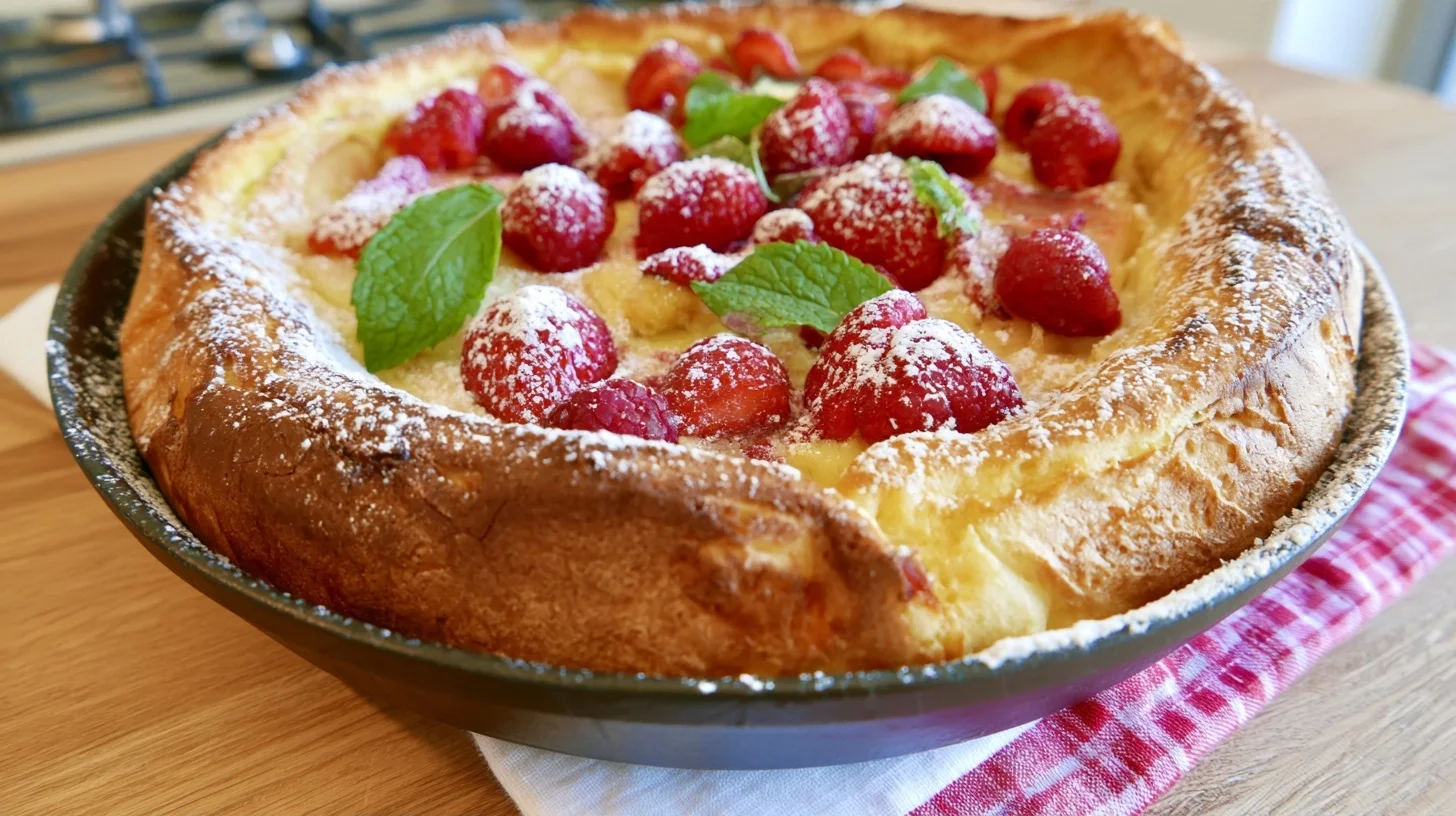
Table of contents
- Why You Will Love This German Pancake
- What Goes Into a German Pancake
- How to Get the Signature Puff
- Why German Pancake Recipe Fail
- Ways to Change the Flavor of German Pancake Recipe
- What to Serve with German Pancakes
- How to Store and Reheat German Pancakes
- German Pancake Recipe
- Frequently Asked Questions about German Pancake Recipe
Why You Will Love This German Pancake
- Uses just 6 ingredients you already have in your kitchen.
- Bakes in one 10 or 12 inch skillet with no flipping required.
- Puffs dramatically in the oven, creating tall edges that hold syrup and fruit.
- Ready in 25 minutes from mixing bowl to table.
What Goes Into a German Pancake
The ingredient list is short, but each component plays a specific role in the rise and texture.
- Eggs: provide structure and create the custardy interior. Use 4 large eggs at room temperature for maximum volume. Cold eggs can be submerged in warm water for 5 minutes.
- All-purpose flour: gives just enough structure to hold the puff without making the pancake dense. Cake flour makes a more delicate pancake but reduces the rise slightly.
- Whole milk: adds richness and helps the batter steam in the oven, creating lift. 2% milk works but produces a slightly less tender result.
- Butter: melted butter goes into the batter for flavor, and additional butter melts in the hot skillet to crisp the bottom and prevent sticking. Salted or unsalted both work.
- Sugar: a small amount balances the eggs and helps the edges caramelize. Omit it entirely for a savory version and add 1/4 teaspoon salt instead.
- Vanilla extract: enhances the flavor without making the pancake taste sweet. Almond extract can replace it for a different profile.
The Right Pan Makes the Difference
A 10 or 12 inch cast iron skillet or oven-safe nonstick skillet controls how high the pancake rises and how evenly it bakes. Cast iron holds heat longer and produces the crispest edges. If you use a glass or ceramic baking dish, the pancake will rise less dramatically and the edges will be softer because the pan does not conduct heat as quickly.
How to Get the Signature Puff
Preheat the Oven and the Pan
The oven must reach 425°F before the batter goes in, and the skillet must preheat in the oven for at least 5 minutes with the butter melting inside. When the batter hits the hot surface, the edges set immediately and the steam from the milk and eggs pushes the batter upward. A cold pan allows the batter to spread before it sets, and the pancake stays flat.
Blend the Batter Smooth
Whisk or blend the eggs, flour, milk, melted butter, sugar, and vanilla for 30 seconds until no lumps remain and the mixture is pale yellow. Overmixing does not harm this batter because the high egg content and oven heat create the structure, not gluten development. A blender produces the smoothest batter and incorporates the most air, which helps the rise.
Pour and Bake Without Opening the Door
Remove the hot skillet from the oven, tilt it to coat the bottom and sides with the melted butter, and pour the batter into the center. Return it to the oven immediately and bake for 18 to 22 minutes without opening the door. The pancake will puff high and turn golden brown. Opening the door before the structure sets releases steam and causes the pancake to collapse before it finishes baking. German pancakes always fall after they come out of the oven, but they should hold their shape enough to form a shallow bowl in the center.
Baking in a Muffin Tin
For individual servings, divide the batter among 12 greased muffin cups and bake at 425°F for 12 to 15 minutes. The smaller portions puff faster and create deeper cups. Brush each muffin cup with melted butter before adding the batter.
Why German Pancake Recipe Fail
Why Did the Pancake Stay Flat?
The skillet was not hot enough when the batter went in, or the oven temperature was too low. The batter needs immediate contact with a surface above 400°F to set the edges while the center rises. If the pancake is already in the oven, increase the temperature to 450°F and bake for 5 more minutes. Next time, preheat the skillet in the oven for at least 5 minutes and verify the oven temperature with an oven thermometer.
Why Did the Pancake Collapse Completely?
The oven door was opened before the pancake finished baking, releasing the steam that holds the structure up. German pancakes always deflate somewhat as they cool, but a pancake that collapses into a flat disk was pulled out too early or exposed to a draft. There is no fix for a collapsed pancake, but it still tastes correct. Prevent it by baking for the full 18 minutes before checking, and serve the pancake within 2 minutes of removing it from the oven while it still holds some height.
Why Are the Edges Burnt but the Center Raw?
The oven temperature was too high, or the skillet was too small. A 9 inch skillet forces the batter too deep, and the edges scorch before the center sets. Move the skillet to the center rack if it was on the top rack, reduce the temperature to 400°F, and bake for 5 more minutes. Next time, use a 10 or 12 inch skillet and check your oven temperature, as many ovens run 25°F hotter than the dial indicates.
Ways to Change the Flavor of German Pancake Recipe
Lemon Poppy Seed
Add 1 tablespoon lemon zest and 1 tablespoon poppy seeds to the batter. The citrus brightens the custard flavor and pairs well with fresh berries and powdered sugar.
German Pancake Recipe with Apple Cinnamon
Sauté 1 cup thinly sliced apple in the butter before adding the batter, and sprinkle 1/2 teaspoon cinnamon over the top. The apple softens in the oven and caramelizes at the edges.
Savory Herb
Omit the sugar and vanilla, increase the salt to 1/2 teaspoon, and add 2 tablespoons chopped fresh herbs such as chives, thyme, or rosemary. Serve with sour cream or crème fraîche instead of syrup.
German Pancake Recipe with Chocolate Chip
Scatter 1/3 cup mini chocolate chips over the batter immediately after pouring it into the skillet. The chips sink slightly and melt into pockets as the pancake bakes.
If you need a different egg-free option for the table, try this pancake recipe without eggs that uses baking powder for lift.
What to Serve with German Pancakes
The shallow center holds toppings that would slide off a flat pancake. Fresh berries, sliced bananas, or sautéed apples sit in the bowl and release juice that pools instead of running off. Powdered sugar, maple syrup, lemon juice, and whipped cream are traditional, but the pancake is mild enough to pair with savory toppings such as smoked salmon, crème fraîche, and capers for brunch.
Serve German pancakes alongside bacon, sausage, or a light fruit salad. The richness of the eggs and butter balances the acidity of citrus or the saltiness of cured meat.
How to Store and Reheat German Pancakes
German pancakes keep for 2 days in the refrigerator in an airtight container or wrapped tightly in plastic wrap. They lose their puff and become dense as they cool, so leftovers will not look like the fresh pancake. Freezing is not recommended because the egg-heavy batter becomes rubbery and watery when thawed.
Reheat individual portions in a 350°F oven for 5 to 7 minutes, or in the microwave for 30 to 45 seconds. The pancake will not puff again, but gentle heat restores some softness to the center. For make ahead serving, prepare the batter the night before and store it in the refrigerator, then pour it into the hot skillet and bake as directed. Cold batter may need 2 extra minutes in the oven.
German Pancake Recipe
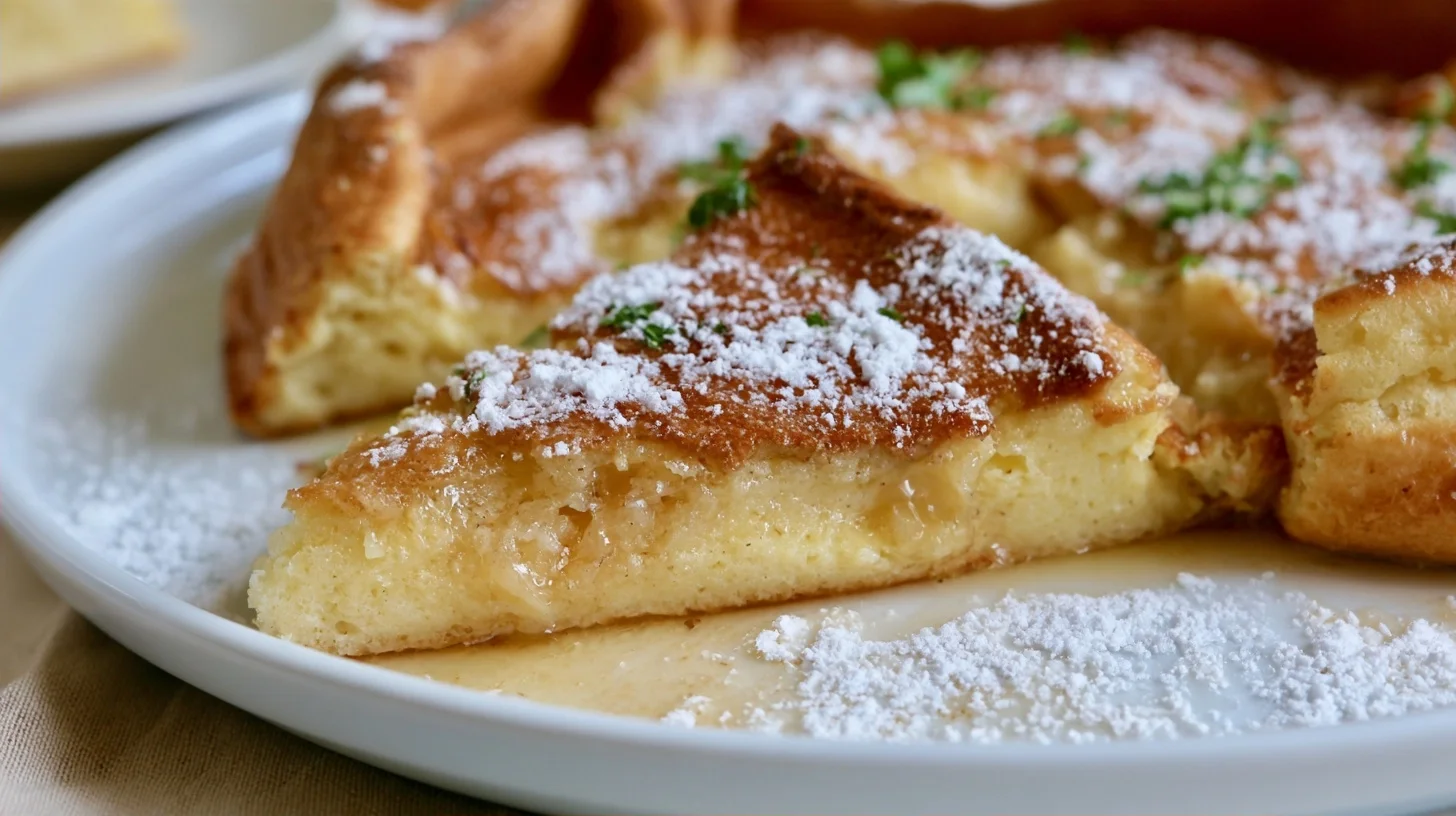
German Pancake
4
servings30
minutes40
minutes300
kcalThis German pancake bakes in a hot oven to create a dramatic puffed pancake with golden crisp edges and a soft custard-like center. The dish takes 25 minutes total and serves 4, with success depending on a fully preheated 425°F oven and a very hot skillet.
Keep the screen of your device on
Ingredients
4 large eggs
1 cup all-purpose flour
1 cup whole milk
2 tablespoons unsalted butter
2 tablespoons granulated sugar
1 teaspoon vanilla extract
0.25 teaspoon salt
Directions
- Preheat the oven to 425°F and place a 10 or 12 inch cast iron or oven-safe skillet inside to heat for 5 minutes while you make the batter.
- Blend the eggs, flour, milk, 2 tablespoons melted butter, sugar, vanilla, and salt in a blender or with a whisk for 30 seconds until smooth and no lumps remain. The batter will be thin and pale yellow.
- Remove the hot skillet from the oven and add the remaining 2 tablespoons butter, tilting the pan to coat the bottom and sides as the butter melts and sizzles, about 10 seconds.
- Pour the batter into the center of the hot skillet and immediately return it to the oven. Bake for 18 to 22 minutes without opening the oven door until the pancake is puffed high and golden brown on the edges.
- Remove from the oven and serve immediately while the pancake still holds its height. It will deflate within 2 to 3 minutes as it cools. Top with powdered sugar, fresh fruit, syrup, or lemon juice.
Notes
- A German pancake bakes at 425°F for 18 to 22 minutes in a skillet that has been preheated in the oven for at least 5 minutes.
- If the pancake stays flat, the skillet was not hot enough when the batter went in. Preheat the skillet for the full 5 minutes and verify your oven temperature with an oven thermometer.
- German pancakes keep for 2 days in the refrigerator in an airtight container but will not puff again when reheated. Reheat in a 350°F oven for 5 to 7 minutes.
Nutrition Facts
- Serving Size: 1 g
- Total number of serves: 4
- Calories: 245kcal
- Fat: 11g
- Carbohydrates: 28g
- Fiber: 1g
- Protein: 9g
Did you make this recipe?
Tag @therecipemasterblog on Instagram and hashtag it with #therecipemaster
Like this recipe?
Follow @therecipemasterblog on Pinterest
Follow us on Facebook!
Follow The Recipe Master on Facebook
Frequently Asked Questions about German Pancake Recipe
German pancake and Dutch baby are two names for the same dish. Both refer to a large, puffy oven-baked pancake made with eggs, milk, and flour in a hot skillet. The name Dutch baby became popular in the United States, while German pancake reflects the dish’s European roots. According to historical accounts, the dish likely originated from German pfannkuchen.
Yes, German pancake batter can be mixed the night before and stored in the refrigerator in a covered container. Whisk it briefly before pouring it into the hot skillet, and add 2 extra minutes to the baking time because the cold batter takes longer to set.
No, but cast iron produces the crispest edges and the highest rise. Any oven-safe skillet works, including nonstick or stainless steel, as long as it can withstand 425°F. Glass or ceramic baking dishes also work but create softer edges and less dramatic puffing because they conduct heat more slowly.
All German pancakes deflate as they cool because the steam that inflated them escapes and the egg structure relaxes. This is normal. The pancake should still hold a shallow bowl shape in the center. If it collapses completely into a flat disk, it was underbaked or exposed to cold air too quickly.



Leave a Reply