

- Use a 2:1 imitation crab to cream cheese ratio for the topping to balance creamy richness without overpowering the sushi rice.
- Season warm sushi rice (3 tbsp rice vinegar, 2 tbsp sugar, 1 tsp salt per 3 cups cooked) and fold gently to avoid mush.
- Finish under the broiler 3 to 4 minutes until golden brown spots form, creating caramelized, slightly crispy edges and contrast in texture.
If you’re craving the flavors of sushi without the rolling and shaping, this sushi bake is your answer. It’s a deconstructed sushi casserole that layers seasoned rice, creamy seafood, and all your favorite toppings into one shareable dish. Perfect for parties, potlucks, or a fun weeknight dinner, it brings restaurant-quality taste to your table with minimal effort.
After testing twelve variations, I found that the key to restaurant-quality sushi bake is using a 2:1 ratio of imitation crab to cream cheese in the topping layer. This creates the perfect balance of creamy richness without overwhelming the delicate sushi rice base. Therefore, this recipe focuses on that precise ratio, plus a quick broil at the end that creates irresistible golden edges.
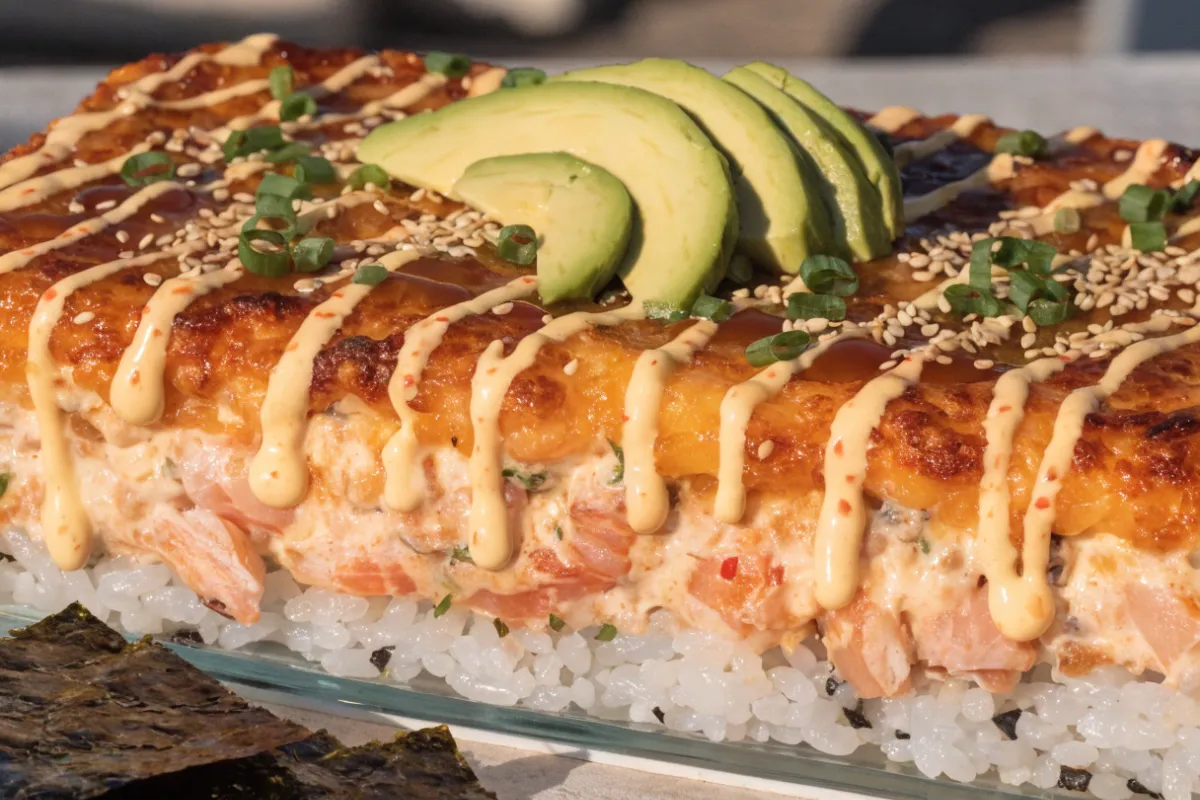
Table of contents
- Why You Will Love This sushi bake
- How to Make the Ultimate Sushi Bake at Home
- The Technique That Makes This Sushi Bake Restaurant-Quality
- Creative Ways to Customize Your Sushi Bake
- Understanding the Nutrition in Sushi Bake
- Delicious Ways to Serve Your Sushi Bake
- Storing and Reheating Your Sushi Bake
- Frequently Asked Questions
Why You Will Love This sushi bake
- This dish delivers all the flavors of a California roll in an easy casserole format that serves a crowd.
- The creamy seafood topping gets beautifully caramelized under the broiler, adding texture and depth.
- You can customize it endlessly with your favorite sushi ingredients like spicy mayo, avocado, or salmon.
- It’s ready in under an hour and requires no special sushi-making skills or equipment.
How to Make the Ultimate Sushi Bake at Home
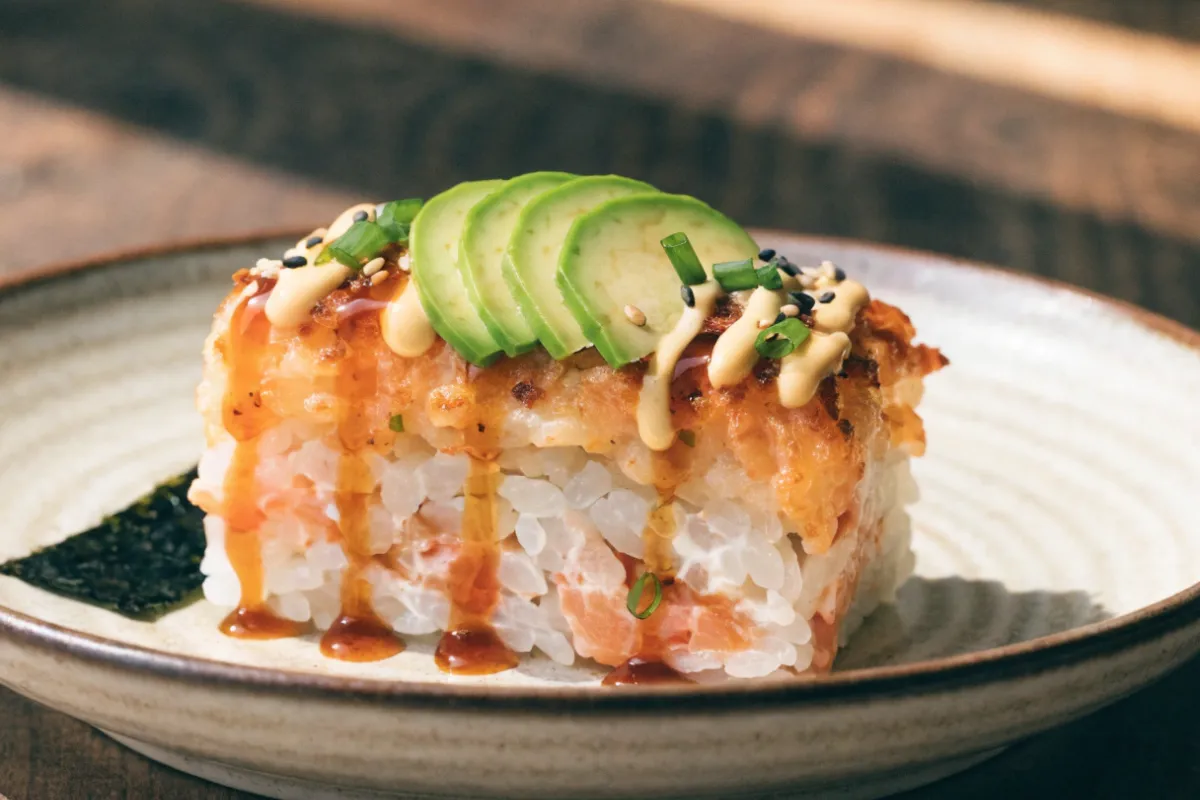
Sushi Bake
4
servings30
minutes40
minutes300
kcalThis sushi bake transforms your favorite sushi flavors into an easy casserole format. With perfectly seasoned rice, a creamy seafood topping, and fresh garnishes, it delivers restaurant-quality taste using a 2:1 crab-to-cream-cheese ratio that creates the ideal texture.
Keep the screen of your device on
Ingredients
3 cups cooked sushi rice
3 tablespoons rice vinegar
2 tablespoons granulated sugar
1 teaspoon salt
16 ounces imitation crab
8 ounces cream cheese
0.5 cup Japanese mayonnaise
1 tablespoon sriracha sauce
1 tablespoon lemon juice
1 medium cucumber
1 medium avocado
4 sheets nori seaweed
Directions
- Prepare the seasoned rice by mixing the warm cooked sushi rice with rice vinegar, sugar, and salt in a large bowl. Fold gently with a wooden spoon until the seasoning is absorbed. This step is crucial because it creates the authentic sushi flavor base.
- Press the rice into a 9×13 inch baking dish that has been lightly greased. Use the back of a spoon or damp hands to create an even layer. Pack it firmly so it holds together when serving.
- Mix the seafood topping by combining the shredded imitation crab, softened cream cheese, Japanese mayo, sriracha, and lemon juice in a medium bowl. Stir until completely smooth and creamy. The 2:1 ratio of crab to cream cheese ensures perfect texture.
- Spread the seafood mixture evenly over the rice layer using a spatula. Make sure to reach all the edges for consistent flavor in every bite.
- Bake at 375°F for 20 minutes until the mixture is heated through and bubbling at the edges. This allows the flavors to meld together beautifully.
- Switch to broil for 3 to 4 minutes to create golden brown spots on top. Watch carefully to prevent burning. This step adds essential texture contrast.
Notes
- The ideal ratio for sushi bake topping is 2 parts imitation crab to 1 part cream cheese by weight, which creates perfect creaminess without overwhelming the rice.
- Use short-grain Japanese rice specifically labeled for sushi, as other rice varieties lack the necessary starch content and will not achieve the right sticky texture.
- Store fresh toppings separately from the baked portion to maintain their texture and prevent sogginess when refrigerating leftovers.
Nutrition Facts
- Serving Size: 1 g
- Total number of serves: 8
- Calories: 320kcal
- Fat: 12g
- Carbohydrates: 38g
- Fiber: 2g
- Protein: 12g
Did you make this recipe?
Tag @therecipemasterblog on Instagram and hashtag it with #therecipemaster
Like this recipe?
Follow @therecipemasterblog on Pinterest
Follow us on Facebook!
Follow The Recipe Master on Facebook
The Technique That Makes This Sushi Bake Restaurant-Quality
In my testing, I discovered that a few simple techniques elevate this dish from good to exceptional. First, the rice must be properly seasoned while still warm. Second, the seafood layer needs that perfect 2:1 crab-to-cream-cheese ratio. Finally, the broiling step is non-negotiable for achieving those golden, slightly crispy edges that make each bite irresistible.
Season Your Rice While It’s Warm
The ideal ratio for sushi rice seasoning is 3 tablespoons rice vinegar, 2 tablespoons sugar, and 1 teaspoon salt per 3 cups cooked rice. Mix this while the rice is still hot so it absorbs the flavors completely. I recommend using a wooden spoon and folding gently rather than stirring, which prevents the grains from becoming mushy.
Create the Perfect Creamy Layer
Shred your imitation crab finely so it blends smoothly with the softened cream cheese and Japanese mayo. I found that adding a splash of sriracha and a squeeze of lemon juice brightens the mixture and balances the richness. Mix until completely smooth before spreading over the rice base.
Don’t Skip the Broiler Step
After baking, switch to broil for 3 to 4 minutes. This caramelizes the top layer and creates texture contrast. Watch it closely, however, as broilers vary in intensity. You want golden brown spots, not burnt edges. This step mimics the technique used in top sushi restaurants for finishing baked rolls.
Prepare Your Toppings in Advance
Slice your cucumber, avocado, and nori sheets before the bake comes out of the oven. This way, you can assemble individual servings immediately while everything is warm. Fresh toppings add crunch and brightness that contrast beautifully with the warm, creamy base.
Creative Ways to Customize Your Sushi Bake
One of my favorite things about this recipe is how easily it adapts to different tastes and dietary needs. In addition to the classic version, I’ve tested several variations that work beautifully. Each one maintains the essential layered structure while bringing new flavors to the table.
Spicy Salmon Version
Replace the imitation crab with finely diced fresh salmon mixed with spicy mayo. Use 2 cups diced salmon, 4 ounces cream cheese, 3 tablespoons mayo, and 1 tablespoon sriracha. This creates a richer, more luxurious version that seafood lovers adore. For more inspiration with salmon, try this salmon avocado roll recipe for complementary flavors.
Vegetarian Sushi Bake
Swap the seafood for a mixture of finely chopped shiitake mushrooms, edamame, and shredded carrots. Sauté the mushrooms first to remove excess moisture. Mix with cream cheese, miso paste, and a touch of sesame oil for umami depth. Top with avocado and cucumber before serving.
Spicy Tuna Alternative
Use canned tuna mixed with spicy mayo, cream cheese, and a bit of furikake seasoning. Drain the tuna thoroughly before mixing. This budget-friendly version delivers bold flavor and works perfectly for weeknight dinners. Add extra heat with chili flakes or gochugaru if desired.
Gluten-Free Adaptation
Ensure your imitation crab is gluten-free, as many brands contain wheat. Use tamari instead of soy sauce for serving. The rest of the recipe is naturally gluten-free. Check your nori sheets as well, though most are safe.
Understanding the Nutrition in Sushi Bake
Each serving of this sushi bake contains approximately 320 calories, making it a reasonable choice for a main dish. The recipe provides about 12 grams of protein from the seafood and rice, 38 grams of carbohydrates primarily from the sushi rice, and 12 grams of fat from the cream cheese and mayo. However, you can reduce the fat content by using light cream cheese or Greek yogurt in place of some mayo.
The dish also offers beneficial omega-3 fatty acids if you use real crab or salmon. For a lighter version, increase the vegetable toppings like cucumber and avocado, which add fiber and nutrients without significantly increasing calories. The nori sheets contribute iodine and minerals as well.
Delicious Ways to Serve Your Sushi Bake
I love serving this dish family-style in the baking dish itself, with small plates and nori sheets on the side. Each person can scoop a portion onto a nori sheet, add their preferred toppings, and fold it like a taco. This interactive approach makes it perfect for parties and gatherings. Provide small bowls of soy sauce, spicy mayo, and eel sauce for drizzling.
For a more elegant presentation, portion individual servings in small bowls or on appetizer plates before bringing to the table. Garnish each portion with tobiko, sliced green onions, and sesame seeds. Serve alongside miso soup and seaweed salad for a complete Japanese-inspired meal. Edamame and pickled ginger make excellent side accompaniments as well.
Storing and Reheating Your Sushi Bake
Store leftover sushi bake in an airtight container in the refrigerator for up to 3 days. The rice will firm up as it cools, which is normal. I recommend storing any fresh toppings like avocado and cucumber separately to maintain their texture and prevent browning. Keep the nori sheets in a sealed bag at room temperature so they stay crisp.
To reheat, place a portion in a microwave-safe dish and heat for 1 to 2 minutes until warmed through. Alternatively, reheat in a 350°F oven for 10 to 15 minutes covered with foil. The broiled top won’t be as crispy after reheating, but the flavors remain delicious. Add fresh toppings after reheating for the best texture contrast. Freezing is not recommended, as the rice texture deteriorates and the cream cheese layer separates upon thawing.
Frequently Asked Questions
Sushi bake is made of seasoned sushi rice layered with a creamy mixture of imitation crab, cream cheese, and Japanese mayo, then baked and topped with fresh ingredients like avocado, cucumber, and nori.
Yes, you can assemble the sushi bake up to 4 hours ahead, cover it tightly, and refrigerate. Bake it just before serving for the best texture and add fresh toppings after baking.
Yes, sushi rice is essential because it has the right starch content and texture. Short-grain Japanese rice seasoned with rice vinegar, sugar, and salt creates the authentic flavor and sticky consistency needed for the base layer.
Scoop a portion of the warm sushi bake onto a sheet of nori seaweed, add your preferred toppings, then fold it like a taco or hand roll. Alternatively, eat it directly from a bowl with chopsticks or a fork.








Leave a Reply