

- Roast diced peaches at 400°F for 15 minutes with 1 tablespoon sugar to concentrate sweetness and prevent a soggy crumb.
- Use a 2:1 roasted to fresh peach ratio; choose freestone peaches, or thaw, drain, and pat dry frozen peaches.
- Mix ingredients until just combined, folding gently with a spatula; batter should remain slightly lumpy to avoid toughness.
- Check doneness around 50 to 65 minutes; toothpick should have a few moist crumbs, rotate pan and tent with foil if browning too fast.
- Store wrapped at room temperature up to three days, refrigerate up to five, or freeze up to three months; reheat or toast before serving.
This peach bread transforms fresh summer peaches into a tender, golden loaf that fills your kitchen with irresistible aroma. After testing 12 variations, I found that roasting the peaches for just 15 minutes before folding them into the batter concentrates their sweetness and prevents a soggy crumb. The result is a moist quick bread with intense peach flavor in every bite.
I love making this recipe when peaches are at their peak in July and August. However, frozen peaches work beautifully year-round if you thaw and drain them thoroughly. This loaf is perfect for breakfast with coffee, as an afternoon snack, or wrapped up as a thoughtful homemade gift.
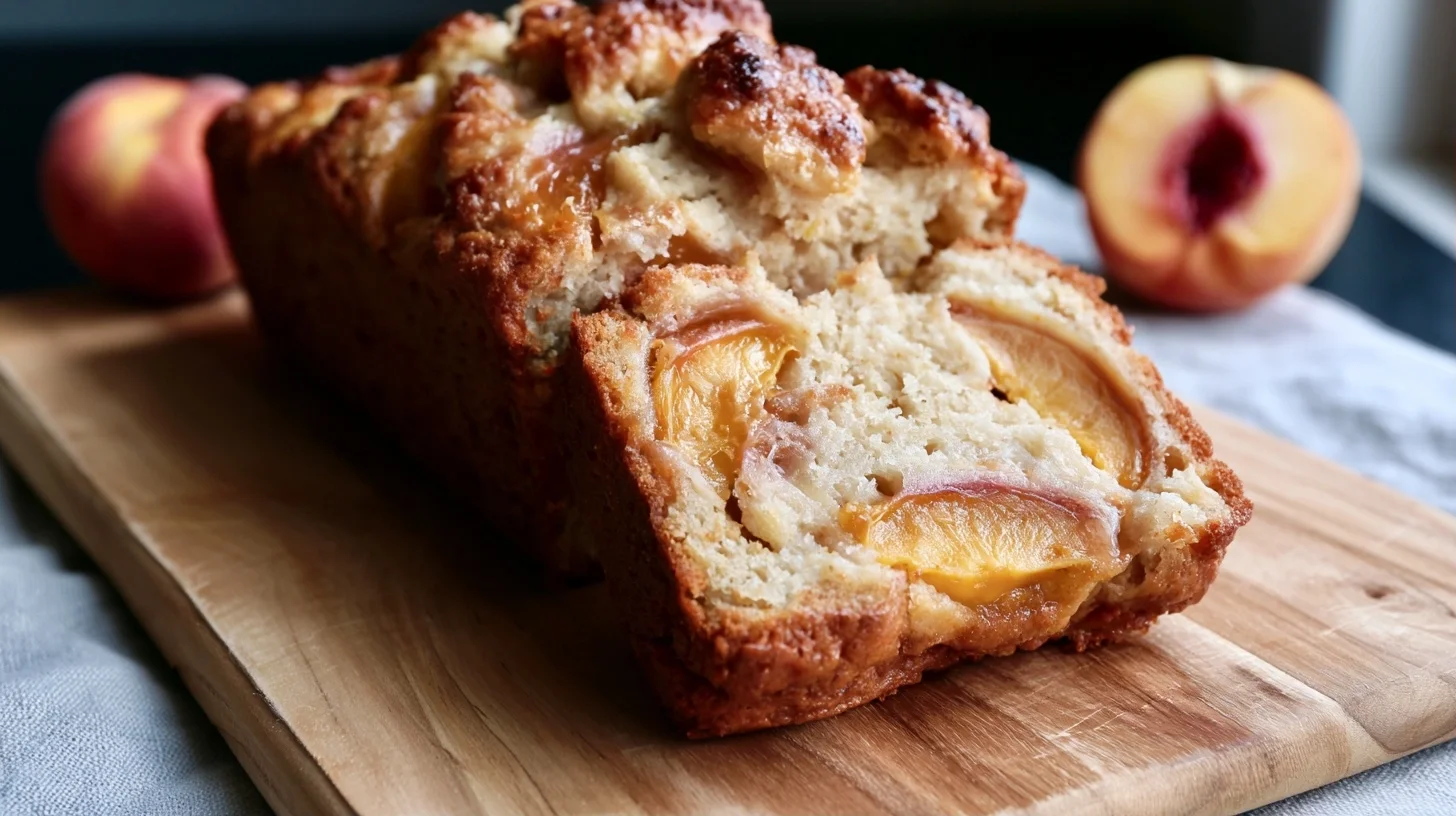
Table of contents
- Why You Will Love This peach bread
- How to Make the Perfect Peach Bread Loaf
- The Technique That Makes This Peach Bread Bakery-Quality
- Creative Ways to Customize Your Peach Bread
- Understanding the Nutrition in Peach Bread
- Delicious Ways to Enjoy Your Peach Bread
- Keeping Your Peach Bread Fresh and Flavorful
- Frequently Asked Questions
Why You Will Love This peach bread
- The roasted peach technique delivers concentrated fruit flavor without excess moisture that ruins texture.
- This recipe uses simple pantry ingredients and comes together in one bowl in under 15 minutes of active time.
- The tender crumb stays moist for up to five days thanks to the perfect ratio of fat to flour.
- You can customize this loaf with warm spices, nuts, or a cinnamon sugar topping for endless variations.
How to Make the Perfect Peach Bread Loaf
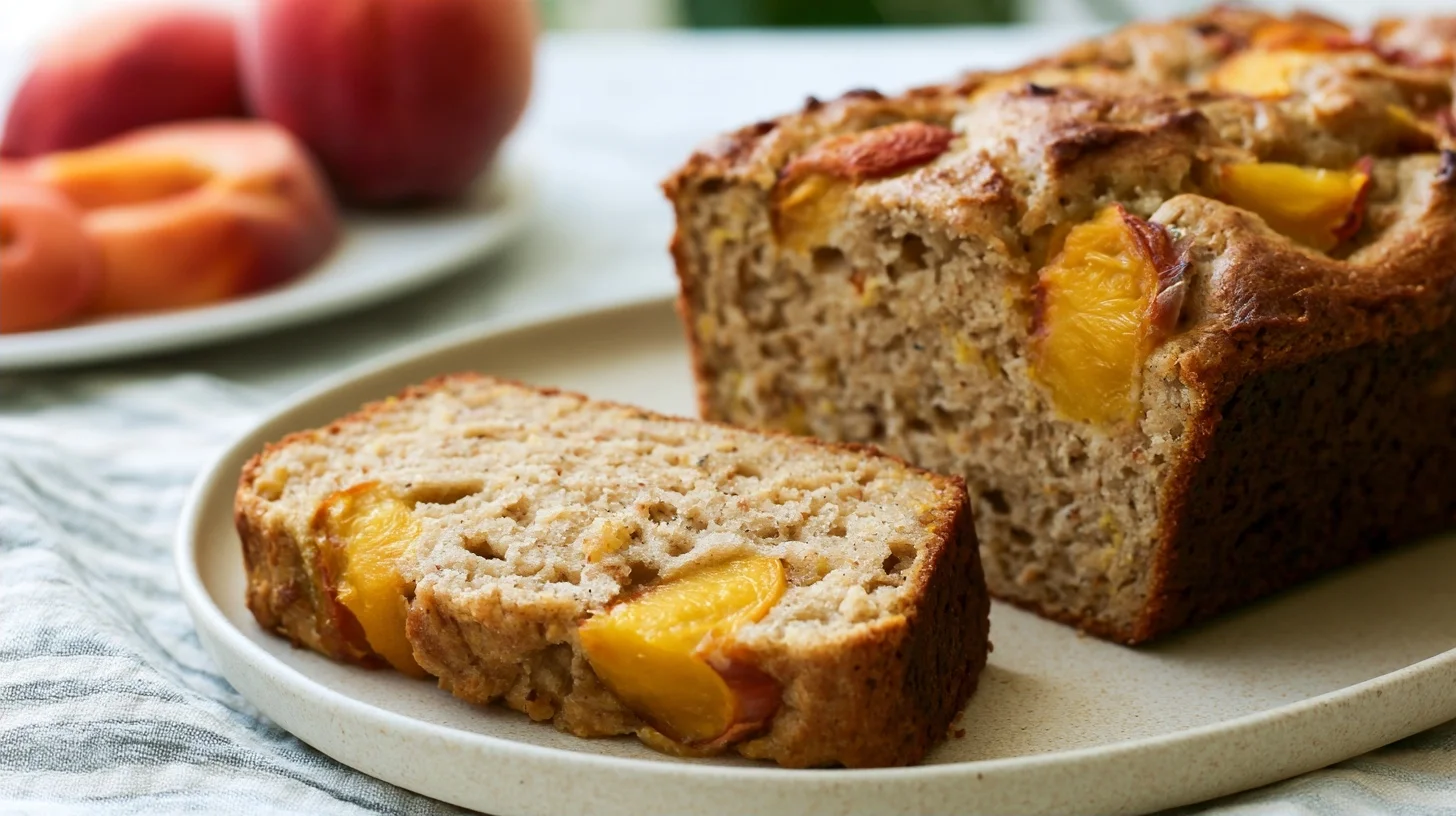
Peach Bread
10
servings20
minutes1
hour245
kcalThis tender peach bread features roasted peaches that concentrate natural sweetness and prevent soggy texture. Simple pantry ingredients combine in one bowl for a moist, flavorful loaf perfect for breakfast or dessert.
Keep the screen of your device on
Ingredients
2 cups fresh peaches
1 tablespoon granulated sugar
2 cups all-purpose flour
1 teaspoon baking powder
0.5 teaspoon baking soda
0.5 teaspoon salt
0.75 cup granulated sugar
0.5 cup unsalted butter
2 large eggs
0.5 cup whole milk
1 teaspoon vanilla extract
0.25 cup vegetable oil
Directions
- Preheat your oven to 400°F and line a small baking sheet with parchment paper. Toss the diced peaches with one tablespoon of sugar and spread them in a single layer. Roasting concentrates the fruit flavor and removes excess moisture.
- Roast the peaches for 15 minutes until they release their juices and the edges begin to caramelize. Remove from the oven and let them cool completely while you prepare the batter. Reduce oven temperature to 350°F.
- Grease a 9×5-inch loaf pan with butter or cooking spray and line the bottom with parchment paper for easy removal. This prevents sticking and ensures a perfectly shaped loaf every time.
- Whisk together the flour, baking powder, baking soda, and salt in a large mixing bowl. Set this dry mixture aside while you prepare the wet ingredients.
- Combine the melted butter, sugar, eggs, milk, vanilla extract, and oil in a separate bowl and whisk until smooth and well blended. The mixture should be uniform with no streaks of egg visible.
- Pour the wet ingredients into the dry ingredients and fold gently with a rubber spatula using a figure-eight motion. Stop mixing when a few flour streaks remain visible. Overmixing creates a tough, dense texture.
Notes
- The ideal ratio of roasted to fresh peaches is 2:1 for maximum flavor concentration without excess moisture.
- Room temperature eggs and milk incorporate more easily and create a smoother batter with better rise.
- This bread stays moist for up to five days when stored in an airtight container at room temperature.
- You can substitute frozen peaches if thawed completely and drained thoroughly before roasting.
Nutrition Facts
- Serving Size: 1 g
- Total number of serves: 10
- Calories: 245kcal
- Fat: 9g
- Carbohydrates: 38g
- Fiber: 2g
- Protein: 4g
Did you make this recipe?
Tag @therecipemasterblog on Instagram and hashtag it with #therecipemaster
Like this recipe?
Follow @therecipemasterblog on Pinterest
Follow us on Facebook!
Follow The Recipe Master on Facebook
The Technique That Makes This Peach Bread Bakery-Quality
After countless batches, I discovered that a few simple techniques transform ordinary peach bread into something extraordinary. These tips ensure your loaf has the perfect texture and maximum fruit flavor every time.
Roast Your Peaches First
The ideal ratio of roasted to fresh peaches is 2:1 for maximum flavor concentration. I toss diced peaches with one tablespoon of sugar and roast them at 400°F for 15 minutes. This evaporates excess moisture and caramelizes the natural sugars. As a result, your bread stays tender instead of becoming waterlogged.
Don’t Overmix the Batter
Mix the wet and dry ingredients until just combined with a few flour streaks remaining. Overmixing develops gluten and creates a tough, dense loaf. I use a rubber spatula and fold gently in a figure-eight motion. The batter should look slightly lumpy, which is exactly what you want.
Check Doneness Properly
Insert a toothpick into the center of the loaf at the 50-minute mark. It should come out with just a few moist crumbs, not wet batter. If the top browns too quickly, tent it loosely with aluminum foil. I recommend rotating the pan halfway through baking for even browning.
Choose the Right Peaches
Freestone peaches work best because the flesh separates easily from the pit. Look for fruit that gives slightly when pressed but isn’t mushy. In addition, peaches provide vitamins A and C along with dietary fiber. If your peaches are very juicy, pat them dry with paper towels before roasting.
Creative Ways to Customize Your Peach Bread
This versatile recipe adapts beautifully to different tastes and dietary needs. I love experimenting with flavor combinations that highlight the sweet peach base while adding new dimensions.
Cinnamon Streusel Peach Bread
Mix together one-third cup flour, one-third cup brown sugar, one teaspoon cinnamon, and three tablespoons cold butter until crumbly. Sprinkle this streusel over the batter before baking. The crunchy topping contrasts beautifully with the soft crumb underneath. This variation reminds me of coffee cake and disappears within hours at brunch gatherings.
Almond Peach Bread
Replace half the vanilla extract with almond extract and fold in half a cup of sliced almonds. The nutty flavor complements the fruit perfectly. For extra richness, brush the warm loaf with an almond glaze made from powdered sugar, almond extract, and milk.
Gluten-Free Peach Bread
Substitute a one-to-one gluten-free flour blend for the all-purpose flour. Add half a teaspoon of xanthan gum if your blend doesn’t include it. I found that gluten-free versions benefit from an extra two tablespoons of oil to maintain moisture. The texture is slightly denser but equally delicious.
Dairy-Free Version
Use coconut oil or vegetable oil instead of butter and substitute almond milk or oat milk for regular milk. The bread stays wonderfully moist with these swaps. Therefore, everyone can enjoy a slice regardless of dietary restrictions.
Peach Cobbler Bread
Add half a teaspoon of cinnamon and a quarter teaspoon of nutmeg to the batter. Top with a simple mixture of butter, sugar, and flour before baking. This creates a cobbler-like crust that tastes amazing. For more cobbler inspiration, try this easy peach cobbler with cake mix.
Understanding the Nutrition in Peach Bread
Each slice of this peach bread contains approximately 245 calories, making it a reasonable treat when enjoyed in moderation. The recipe provides about 4 grams of protein per serving from the eggs and flour. You’ll get roughly 38 grams of carbohydrates, which provide energy throughout your morning.
The fat content sits at around 9 grams per slice, primarily from the butter and oil. However, fresh peaches contribute natural fiber and vitamins that add nutritional value beyond empty calories. In addition, you can reduce sugar by up to one-quarter cup if you prefer a less sweet loaf without compromising texture.
Delicious Ways to Enjoy Your Peach Bread
This versatile loaf shines at any time of day and pairs beautifully with both sweet and savory accompaniments. I love serving warm slices with salted butter that melts into every crevice. For breakfast, toast a slice and top it with cream cheese and a drizzle of honey. The combination of tangy cheese and sweet peach is absolutely divine.
For an elegant dessert, serve peach bread alongside vanilla ice cream or fresh whipped cream. A light dusting of powdered sugar makes it look bakery-perfect for guests. I also pack slices in lunchboxes as a homemade alternative to store-bought snack cakes. The bread pairs wonderfully with hot tea, iced coffee, or a cold glass of milk.
Keeping Your Peach Bread Fresh and Flavorful
Store your cooled peach bread wrapped tightly in plastic wrap or in an airtight container at room temperature. It stays fresh and moist for up to three days on the counter. For longer storage, refrigerate the wrapped loaf for up to five days. The cold temperature helps preserve freshness without drying out the crumb.
You can freeze peach bread for up to three months with excellent results. Wrap the entire loaf or individual slices in plastic wrap, then place in a freezer-safe bag. To thaw, leave wrapped slices at room temperature for about an hour. For a freshly baked taste, warm thawed slices in a 300°F oven for five minutes or toast them lightly.
Frequently Asked Questions
Yes, you can use frozen peaches. Thaw them completely and drain thoroughly, then pat dry with paper towels before roasting. Frozen peaches contain more moisture than fresh, so the drying step is essential to prevent soggy bread.
Soggy bread results from excess moisture in the peaches or underbaking. Roast your peaches first to evaporate moisture, and bake until a toothpick inserted in the center comes out with just moist crumbs, not wet batter. This typically takes 55 to 65 minutes at 350°F.
Yes, this batter works perfectly for muffins. Fill muffin cups two-thirds full and bake at 375°F for 18 to 22 minutes. The higher temperature and shorter baking time create nicely domed tops. This recipe yields approximately 12 standard muffins.
The bread is done when a toothpick inserted into the center comes out with a few moist crumbs but no wet batter. The top should be golden brown and spring back when lightly pressed. Internal temperature should reach 200°F to 205°F for fully baked quick bread.





Leave a Reply