

Whenever I find myself staring at a fridge full of ingredients and a brain full of fatigue, a sheet pan salmon is my go-to culinary rescue. Salmon has graced dinner tables for centuries, prized not only for its rich flavor but also for its legendary nutritional profile. This specific sheet pan salmon recipe fits perfectly into your schedule as a quick weeknight meal, but it is elegant enough to serve as a festive dish when friends drop by unexpectedly. It is the ultimate healthy comfort food option that respects your time and your palate. As a chef, I love how the high heat of the oven creates a gentle crust on the fish while softening the vegetables into caramelized perfection.
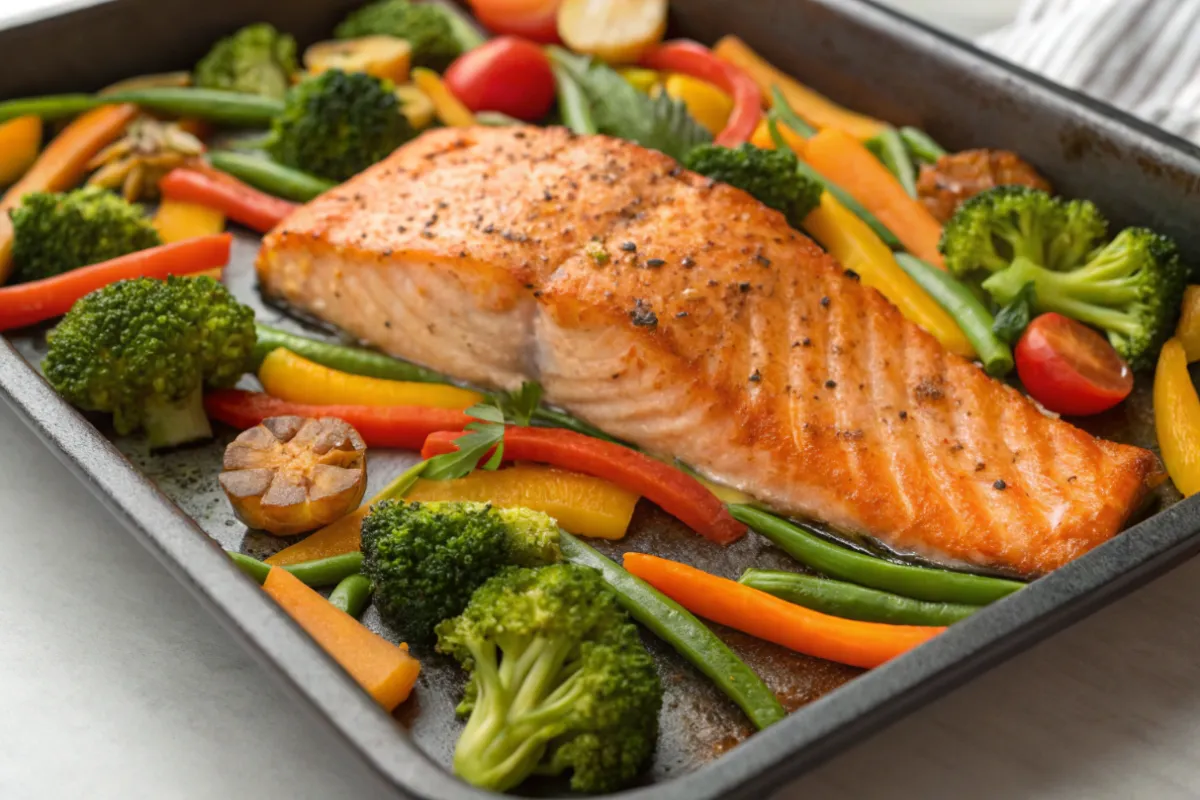
Table of contents
Sheet Pan Salmon Recipe Card
Sheet Pan Salmon Recipe
4
servings15
minutes15
minutes450
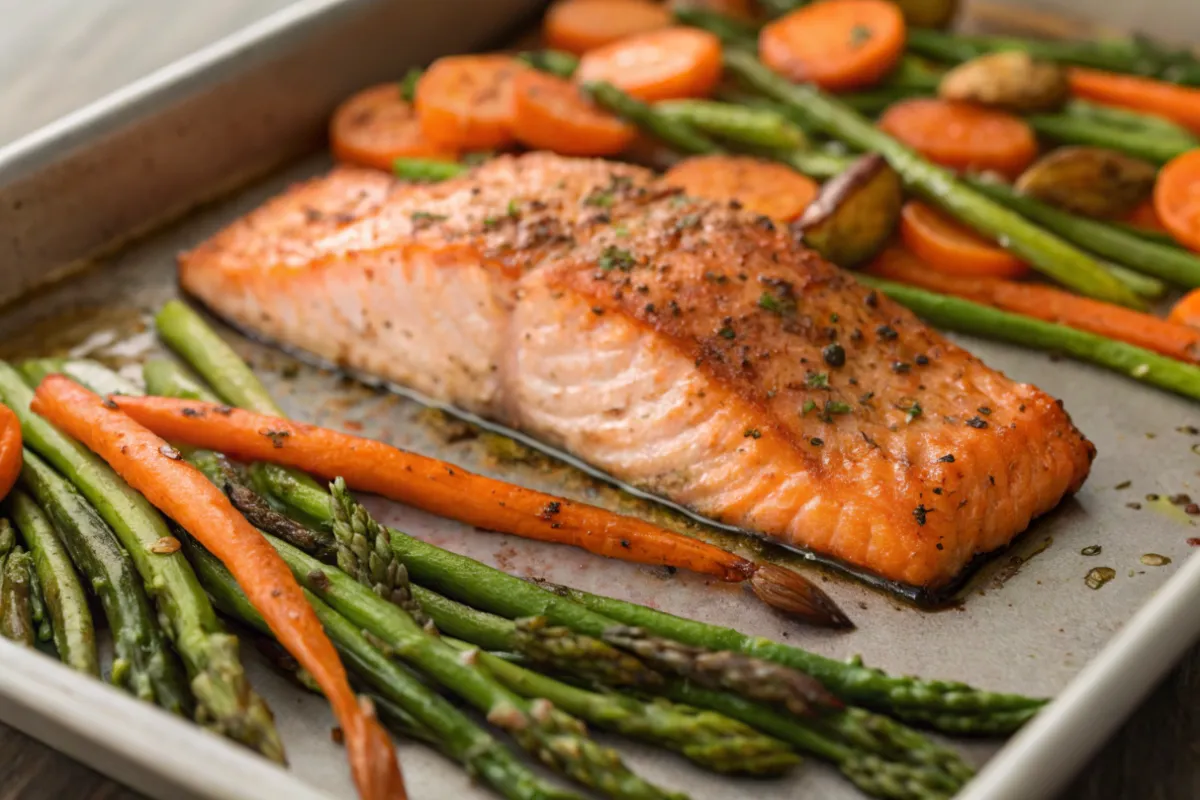
kcalA vibrant and healthy sheet pan salmon featuring flaky fillets and perfectly roasted seasonal vegetables in a lemon-garlic butter sauce.
Keep the screen of your device on
Ingredients
1.5 lbs Salmon Fillets (cut into 4 pieces)
1.0 lb Baby Potatoes (halved)
12.0 oz Asparagus (trimmed)
3.0 tablespoons Olive Oil
2.0 cloves Garlic (minced)
0.5 teaspoon Salt
0.5 teaspoon Black Pepper
1.0 Lemon (sliced into rounds)
1.0 tablespoon Fresh Dill (chopped)
Directions
- First, you want to get that oven roaring. Preheat it to 400°F and line a large rimmed baking sheet with parchment paper for easy cleaning.
- Take your halved baby potatoes and toss them in a bowl with 1.0 tablespoon of oil and a pinch of salt. Spread them on the pan and roast them for 10.0 minutes alone since they take longer than the fish.
- While the potatoes get a head start, pat your salmon fillets dry. This is the most important part if you want that professional finish.
- Push the potatoes to the edges of the pan to make room in the center. Lay the salmon fillets down and surround them with the trimmed asparagus.
- Drizzle the remaining oil over the salmon and asparagus. Sprinkle the minced garlic, salt, and pepper evenly across everything on the tray.
- Place a lemon slice on top of each salmon fillet. This looks beautiful and infuses the meat with a bright, citrusy aroma.
- Slide the tray back into the oven. Roast the sheet pan salmon for about 12.0 to 15.0 minutes depending on the thickness of your fillets.
- You will know the fish is done when it flakes easily with a fork and reaches an internal temperature of 145°F.
- Remove the pan from the oven and sprinkle the fresh dill over the top. Let it rest for 2.0 minutes before serving.
Notes
- Cooking Time: If your salmon fillets are very thin (tail pieces), check them at 10.0 minutes to avoid overcooking.
- Vegetable Swaps: Broccoli or green beans work just as well as asparagus.
- Crispy Skin: If you want extra crispy skin, sear the salmon in a pan for 2.0 minutes before placing it on the sheet pan.
Nutrition Facts
- Fat: 24g
- Sodium: 480mg
- Carbohydrates: 22g
- Protein: 34g
Did you make this recipe?
Tag @therecipemasterblog on Instagram and hashtag it with #therecipemaster
Like this recipe?
Follow @therecipemasterblog on Pinterest
Follow us on Facebook!
Follow The Recipe Master on Facebook
Getting Ahead of the Heat
Efficiency in the kitchen is about the “mise en place” or everything in its place. To make your sheet pan salmon experience truly effortless, follow these prep steps:
- Uniform Chopping: Slice your vegetables, like potatoes or carrots, into 0.5-inch pieces. This ensures they cook at the same rate as the fish.
- The Dry Pat: Use a paper towel to pat the salmon fillets bone-dry. This is the secret to getting a golden exterior rather than a gray, steamed one.
- Oil the Pan: Lightly coat your parchment paper with 1.0 tablespoon of olive oil before laying down the ingredients to prevent any skin-sticking.
- Season in Advance: Mix your salt, pepper, and herbs in a small bowl. This allows you to sprinkle evenly without touching your spice jars with “chicken fingers” or “fish hands.”
Why This One-Pan Wonder Simply Wins
The genius of a sheet pan salmon lies in the unified cooking environment. When you roast protein and produce together, the juices from the salmon mingle with the vegetables. This creates a built-in sauce that you simply cannot replicate in separate pans. It is also incredibly efficient for cleanup. You only have one tray to wash.
Customization is another reason this recipe is superior. If you are following a specific diet, you can easily swap potatoes for cauliflower or radishes to keep it low-carb. For those interested in the benefits of Omega-3 fatty acids, this meal is a powerhouse. Using high-quality wild-caught fish ensures a cleaner flavor profile. This approach ensures a balanced meal that feels like a splurge but takes less effort than ordering takeout.
The Golden Rules for perfect Sheet Pan Salmon
- Mind the Temperature: Roasting at 400°F is the sweet spot. It provides enough heat to blister the vegetables without drying out the delicate fish oils.
- The Squeeze: Always add fresh lemon juice after the sheet pan salmon comes out of the oven. Cooking lemon slices is great for aromatics, but the juice can turn bitter if scorched.
- Skin Side Down: Always place the fish skin-side down. The skin acts as a protective barrier, keeping the flesh moist and tender.
- Don’t Overcrowd: Give your ingredients room to breathe. If the pan is too crowded, the vegetables will steam instead of roast.
For professional guidance on selecting the freshest fish, visit the Monterey Bay Aquarium Seafood Watch for sustainable choices.
Creative Variants to Keep It Fresh
The Mediterranean Medley
Swap the asparagus for cherry tomatoes, olives, and sliced zucchini. Toss the vegetables in dried oregano and feta cheese during the last 5.0 minutes of baking. This version of the sheet pan salmon feels like a vacation on a plate.
The Spicy Soy Glaze
Whisk together 2.0 tablespoons of soy sauce, 1.0 tablespoon of honey, and 0.5 teaspoon of sriracha. Brush this over the fish halfway through the cooking time. It creates a sticky, umami-rich crust that pairs beautifully with bok choy.
The Pesto Power Bake
Slather the top of each fillet with a thick layer of basil pesto and top with panko breadcrumbs. This adds a delightful crunch and a punch of herbaceous flavor that transforms the sheet pan salmon into a gourmet feast.
If you enjoyed this meal, I suggest you also try Sockeye Salmon, Crab-Stuffed Salmon, or Salmon Loaf Recipe with Mayonnaise!
Solving Your Seafood Dilemmas
At 400°F, salmon typically takes between 12.0 and 15.0 minutes. Thicker center-cut pieces will take longer, while thin tail pieces cook very quickly.
For a sheet pan salmon, the oven should be at 400°F. The fish itself is safely cooked when it reaches an internal temperature of 145°F according to USDA standards.
You do not need to cover it. Leaving it uncovered allows the heat to circulate and creates a better texture on the exterior of the fish.
A Final Zesty Bite
I hope this sheet pan salmon becomes a mainstay in your kitchen rotation. There is something deeply satisfying about serving a meal that is as colorful as it is nutritious. It proves that eating well doesn’t have to be complicated or time-consuming. Whether you are refueling after a workout or celebrating a small win, this dish never disappoints.







Leave a Reply