

- Prep ahead: pierce eggs' fat end, have an ice bath ready, and mix marinade while water boils.
- Boil technique: start with boiling water and shock eggs in ice water for easy peeling.
- Timing matters: boil large eggs 6 minutes 30 seconds for jammy yolks; use a timer.
- Marinate properly: use a Ziploc bag, squeeze out air, soak at least 4 hours, preferably overnight.
- Customize and store: swap tamari for gluten free, try spicy or tea variations, refrigerate and eat within 3 days.
That specific texture and depth of flavor is exactly what these soy sauce eggs deliver. They are a staple in Japanese cuisine (known as Shoyu Tamago or Ajitsuke Tamago) and have rightfully become a global obsession.
This dish fits seamlessly into your life as a high-protein snack, a topping for a quick weeknight meal of noodles, or a healthy comfort food option over steaming white rice. Whether you call them ramen eggs, shoyu eggs, or just marinated eggs, this recipe transforms the humble boiled egg into a gourmet experience.
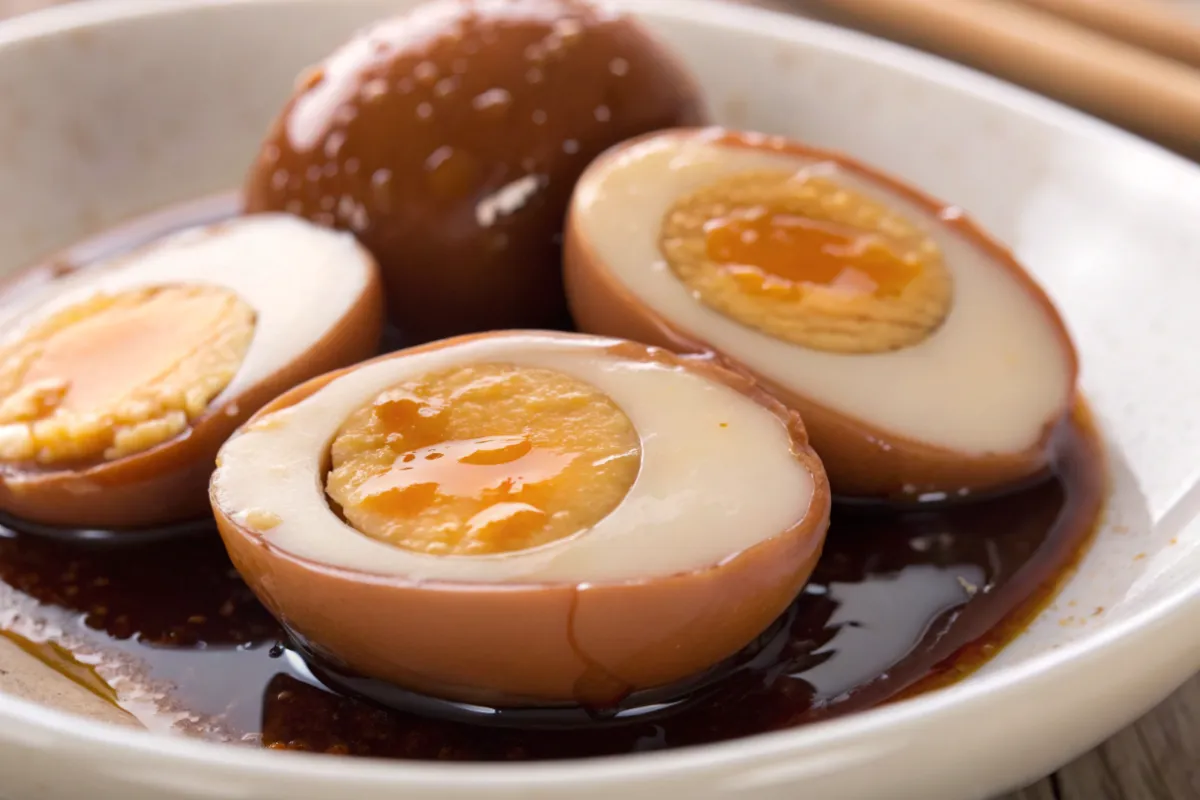
Table of contents
Smart Prep for the Perfect Soak
The beauty of soy sauce eggs is that they require time to marinate, meaning you must prep ahead. Here is how to organize your kitchen workflow:
- Pierce the Shells: Before boiling, use a push pin to poke a tiny hole in the bottom (fat end) of each egg. This releases pressure and prevents cracking.
- Prepare the Ice Bath: This is non-negotiable. Have a bowl filled with ice and water ready before you drop the eggs in the boiling water.
- Mix the Marinade: Whisk your soy sauce, mirin, sugar, and aromatics in a container or Ziploc bag while the water boils.
- Peel Carefully: Peel the eggs under running water to ensure a smooth surface for the marinade to penetrate.
Soy Sauce Egg Recipe Card
Soy Sauce Eggs Recipe
6
servings10
minutes7
minutes80
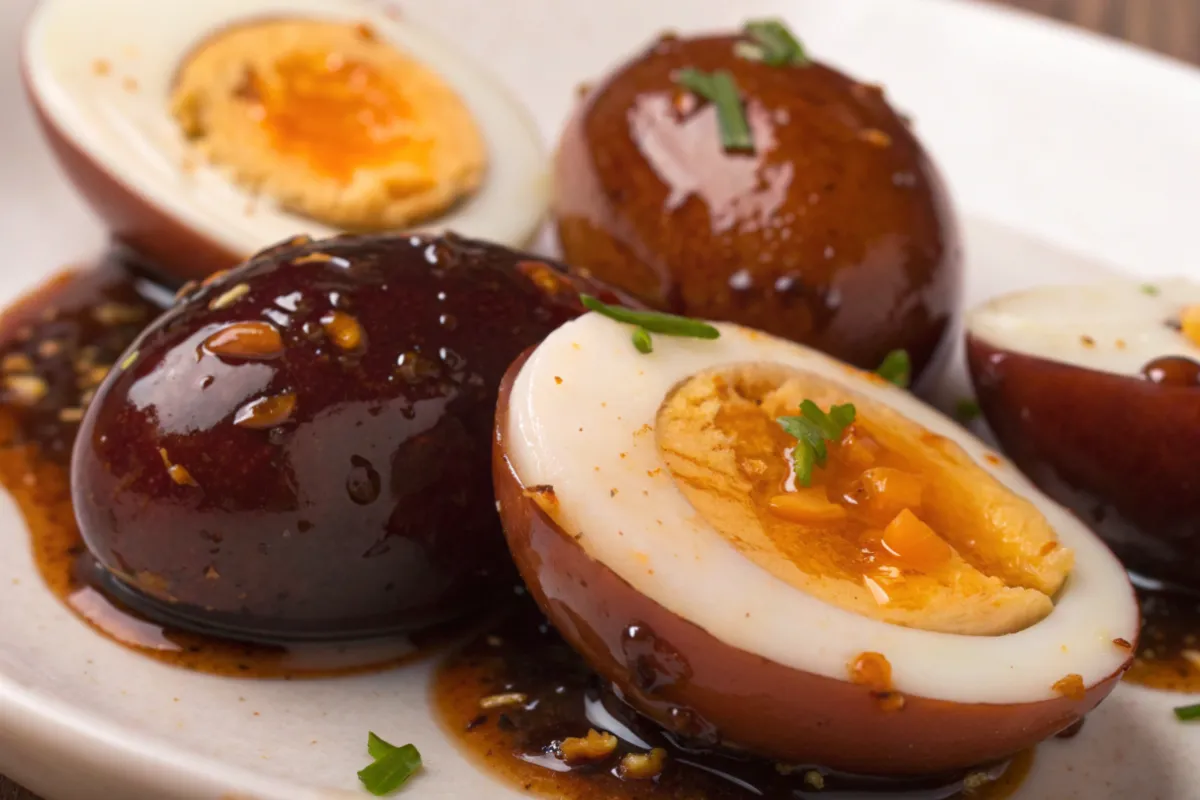
kcalThese jammy, marinated soy sauce eggs feature tender whites infused with a savory soy-mirin blend and a rich, golden, semi-liquid yolk.
Keep the screen of your device on
Ingredients
6.0 large Eggs (fridge cold)
0.5 cup Soy Sauce (regular or low sodium)
0.5 cup Water (or unsalted vegetable stock)
0.25 cup Mirin (Japanese sweet rice wine)
1.0 tablespoon Sugar (or brown sugar)
1.0 teaspoon Vinegar (rice or white vinegar)
1.0 clove Garlic, smashed
1.0 slice Ginger (optional)
1.0 Star Anise (optional for depth)
Directions
- Start by preparing a large bowl filled with ice and cold water. This ice bath is crucial to stop the cooking process immediately.
- Bring a pot of water to a rolling boil. There should be enough water to completely submerge the eggs. Add the teaspoon of vinegar to the water (this helps if a shell cracks).
- Using a push pin, carefully poke a small hole in the rounder, fat end of each egg. Gently lower the cold eggs into the boiling water using a slotted spoon.
- Lower the heat slightly to a simmer so the eggs don’t bounce around and crack. Set a timer for exactly 6.0 minutes and 30.0 seconds for jammy yolks. If you prefer firmer yolks, cook for 8.0 minutes.
- While the eggs cook, combine the soy sauce, water, mirin, sugar, garlic, ginger, and star anise in a small saucepan. Heat gently just until the sugar dissolves. Let it cool completely. Alternatively, just whisk them together if using superfine sugar.
- When the timer goes off, immediately transfer the eggs to the ice bath. Let them cool for at least 10.0 minutes.
- Peel the eggs carefully under running water or in the bowl of water. Place the peeled eggs into a Ziploc bag or a small container. Pour the cooled marinade over the eggs.
- Seal the bag, squeezing out as much air as possible to ensure the eggs are fully submerged. Refrigerate for at least 4.0 hours, preferably 12.0 to 24.0 hours.
- Remove eggs from the marinade and enjoy. They can be stored in a sealed container for up to 3 days.
Notes
- Storage: The eggs will get saltier the longer they sit in the marinade. After 24 hours, it is best to remove them from the liquid.
- Reuse Marinade: You can boil the marinade for a minute after removing the eggs and use it as a stir-fry sauce.
- Egg Freshness: Slightly older eggs (1 week old) peel easier than brand new fresh eggs.
Nutrition Facts
- Fat: 5g
- Sodium: 350mg
- Carbohydrates: 3g
- Protein: 6g
Did you make this recipe?
Tag @therecipemasterblog on Instagram and hashtag it with #therecipemaster
Like this recipe?
Follow @therecipemasterblog on Pinterest
Follow us on Facebook!
Follow The Recipe Master on Facebook
The Secret Sauce
What makes this specific soy sauce eggs recipe superior? It comes down to the balance of the marinade and the cooking time. Many recipes are too salty or result in rubbery whites. My ratio uses a combination of soy sauce, mirin, and water (or dashi) to cure the egg gently. The salt in the soy sauce draws moisture out of the egg white, firming it up while infusing flavor, while the sugar in the mirin adds a glossy sheen and sweetness.
Furthermore, this recipe is highly customizable. For a gluten-free version, simply swap standard soy sauce for Tamari or coconut aminos. If you want to dive deeper into the science of how curing affects proteins, read about how marinating works. This balance ensures the yolk remains jammy and the white becomes flavorful without turning tough.
The Soy Sauce Egg Guide
I have peeled thousands of eggs in professional kitchens, and these are my top tips to ensure your soy sauce eggs are flawless:
- Boiling Water Start: Always start with boiling water, not cold. This makes the peel easier to remove later because the shock separates the membrane from the shell.
- The 6-Minute Rule: For that perfect runny yolk, boil large eggs for exactly 6 minutes and 30 seconds. Use a timer.
- Marinate in a Bag: Use a Ziploc bag for marinating. Squeeze the air out before sealing. This ensures the marinade surrounds the eggs completely using less liquid than a Tupperware container.
- Patience is Key: Let them soak for at least 4 hours, but preferably overnight. The flavor penetrates deeper with time.
For more on the perfect boil times, check out this guide on boiling eggs perfectly.
Customizing Your Egg
The Spicy Korean Drug Egg (Mayak Eggs)
This viral variation takes the standard soy sauce eggs to a new level. “Mayak” translates to “drug” in Korean, implying they are addictive. To make this variant, add plenty of chopped green onions, toasted sesame seeds, minced garlic, and sliced red and green chili peppers to the marinade. Include a splash of corn syrup or honey for extra glossiness. The result is a chunky, spicy, sweet, and savory sauce that you will want to pour over everything.
The Tea-Infused Marble Egg
Inspired by Chinese tea eggs, this version adds an aesthetic twist and herbal depth. Boil the eggs, crack the shells gently all over without peeling them, and then simmer them in a marinade containing black tea leaves, star anise, cinnamon, and soy sauce. While the texture is fully hard-boiled rather than jammy, the beautiful marble pattern and aromatic spice flavor offer a completely different experience.
These eggs are the perfect topping for my Ramen Bowl or can be served alongside Adobo Chicken.
The Soy Sauce Egg Q&A
These soy sauce eggs are best consumed within 3 days. Because they have soft yolks, they don’t last as long as fully hard-boiled eggs. Keep them refrigerated in a sealed container.
If your eggs are difficult to peel, they might be too fresh, or you didn’t shock them in ice water long enough. Starting with boiling water instead of cold water also significantly helps the peeling process.
Yes, you can reuse the marinade once more for another batch of eggs. However, for food safety, you should boil the liquid for a minute and let it cool down again before adding fresh eggs. Do not keep it for more than a week.
This usually happens if you marinate them for too long (over 24 hours) or if the marinade is too acidic or salty. Stick to the 12-24 hour window for the best texture.
The Ultimate Ramen Topping
I hope this soy sauce eggs recipe becomes a staple in your meal prep routine. The transformation from a plain boiled egg to a savory, umami-packed delight is truly magical. It is one of those high-return, low-effort recipes that makes any meal feel special.






Leave a Reply