
- Make a smooth emulsion by prepping ingredients and using room temperature egg yolk for reliable emulsification.
- Balance oils: blend neutral oil with high-quality olive oil to avoid bitterness and keep a creamy texture.
- Add oil very slowly, drop by drop, and use Dijon mustard as an emulsifier to prevent breaking.
- Use garlic paste or roasted garlic for flavor control; mortar and pestle yields the best garlic intensity.
- Store refrigerated in an airtight container and consume within 3 to 4 days due to raw egg yolks.
I still vividly remember my first trip to Barcelona. I sat at a small tapas bar, and they served a simple plate of potatoes. Beside it was a dollop of golden, velvety sauce that tasted like pure magic. That was my introduction to the power of a good garlic aioli recipe. It transformed a humble potato into a gourmet experience.
Many people mistake this sauce for simple mayonnaise mixed with garlic powder, but true aioli is an art form. It is a creamy emulsion that balances the sharp bite of fresh garlic with the richness of oil and egg yolk. This dish fits perfectly as a festive dish accompaniment for seafood platters or a quick weeknight meal upgrade for burgers and sandwiches. Once you make this garlic aioli recipe from scratch, you will never go back to the jarred stuff.
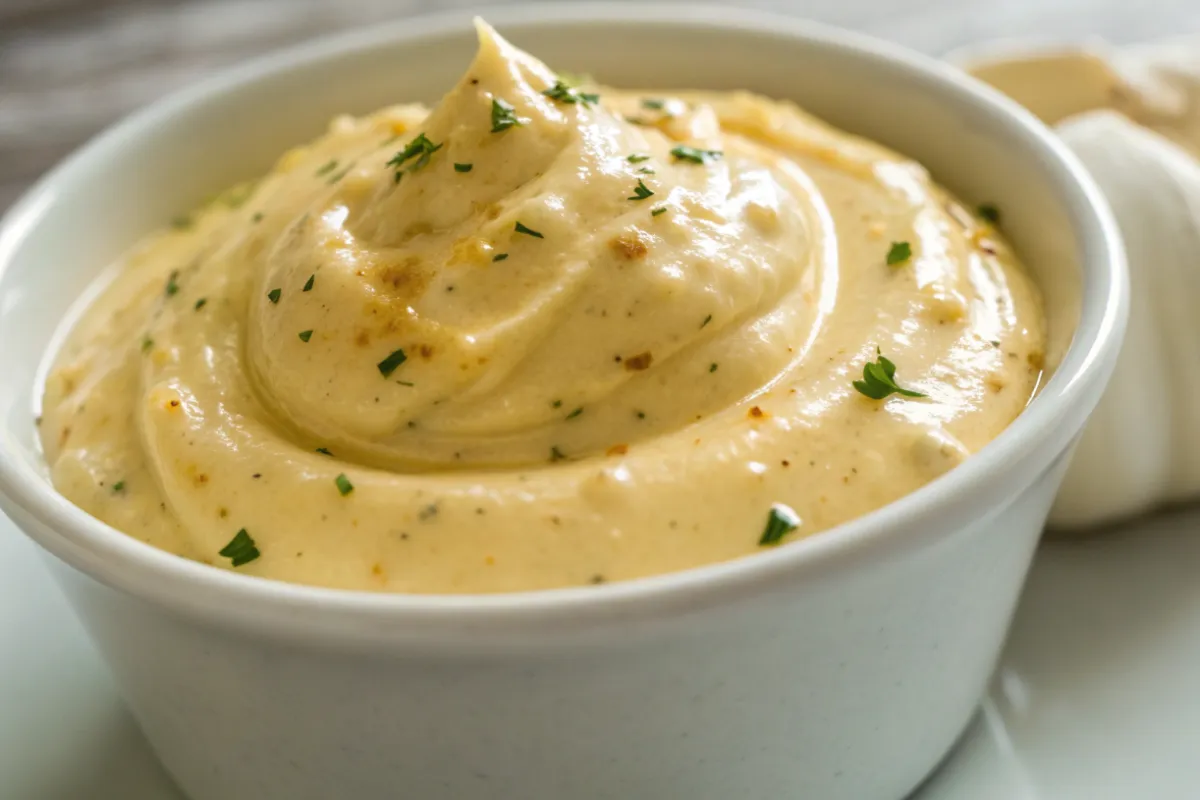
Table of contents
Smart Prep for a Smooth Emulsion
Making an emulsion happens quickly, so you need your ingredients ready. Here is how to prep for this garlic aioli recipe so you are not rushing later:
- Room Temperature Eggs: Take your egg out of the fridge 30 minutes before starting. A cold egg yolk struggles to emulsify with room temperature oil.
- Mince the Garlic: Smash your garlic into a paste using the side of your knife and a pinch of salt. This prevents chunky bits in your smooth sauce.
- Secure the Bowl: Place a damp kitchen towel under your mixing bowl. This holds the bowl in place so you can whisk with one hand and pour oil with the other.
- Juice the Lemon: Squeeze your lemon juice into a separate small container to remove any seeds beforehand.
Garlic Aioli Recipe Card
Garlic Aioli Recipe
16
servings10
minutes0
minutes95
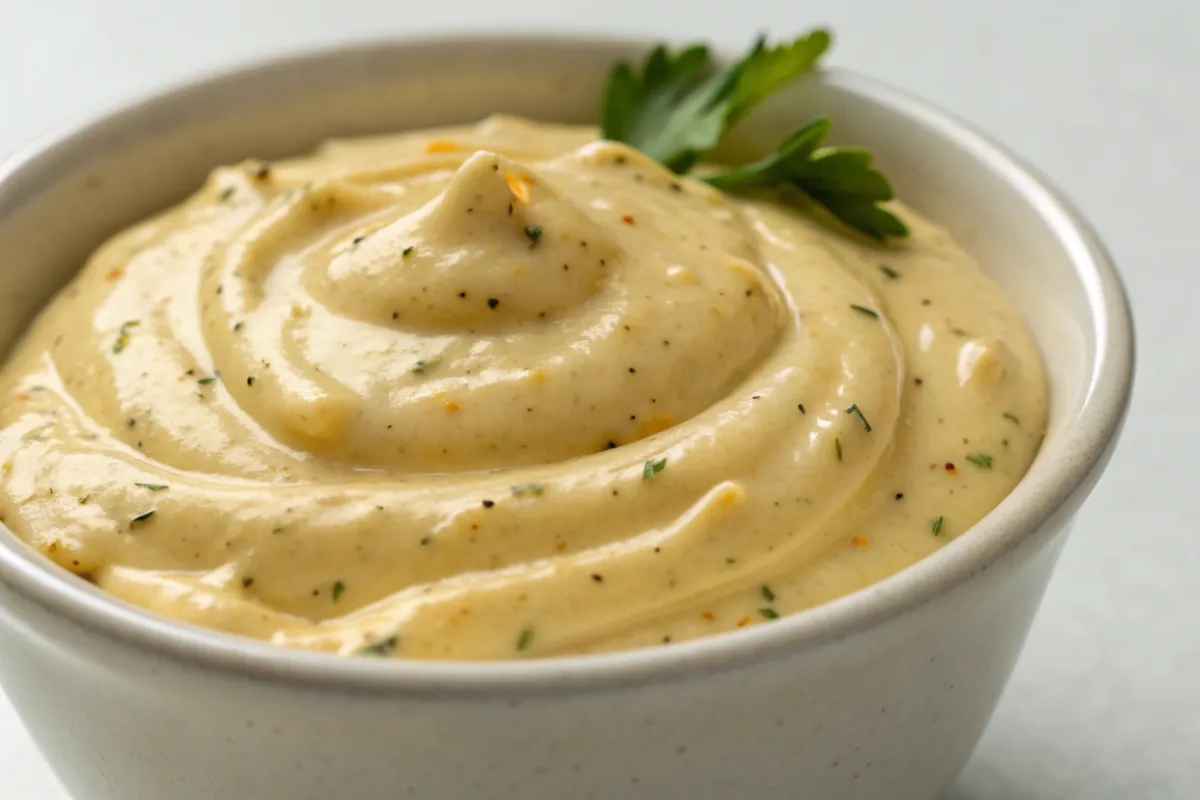
kcalThis luxurious garlic aioli recipe features a velvety emulsion of egg yolks, oil, and lemon, punched up with a zesty kick of fresh garlic.
Keep the screen of your device on
Ingredients
2.0 large Garlic Cloves, peeled
1.0 large Egg Yolk, room temperature
1.0 teaspoon Dijon Mustard
1.0 tablespoon Fresh Lemon Juice
0.5 cup Neutral Oil (grapeseed or canola)
0.25 cup Extra Virgin Olive Oil
0.25 teaspoon Sea Salt (plus more to taste)
0.1 teaspoon White Pepper (optional)
Directions
- Start by preparing your garlic. Mince the garlic cloves finely. sprinkle the salt over the minced garlic and use the flat side of your chef’s knife to mash it into a smooth paste against the cutting board. This step is crucial for smooth texture.
- In a medium mixing bowl, combine the garlic paste, egg yolk, Dijon mustard, and fresh lemon juice. Whisk these ingredients together vigorously until they are well combined and slightly frothy.
- This is the most important part. While whisking constantly, begin adding the neutral oil drop by drop. Do not rush this. Once the mixture starts to thicken and emulsify, you can increase the flow to a very thin, steady stream.
- Once the neutral oil is incorporated, whisk in the extra virgin olive oil in a steady stream. The sauce should be thick, pale yellow, and glossy. If it gets too thick, you can whisk in a teaspoon of water to loosen it.
- Taste the aioli. Season with white pepper and add more salt or lemon juice if needed. Transfer to a jar and refrigerate for at least 30 minutes before serving to let the flavors meld.
Notes
- Oil Choice: Using 100% olive oil can make the aioli bitter. The blend provides the best flavor.
- Storage: This contains raw egg and no preservatives. It must be stored in the fridge and used within 3 to 4 days.
- Equipment: You can use a food processor, but the texture is often better and thicker when whisked by hand.
Nutrition Facts
- Fat: 11g
- Sodium: 45mg
- Carbohydrates: 0.5g
Did you make this recipe?
Tag @therecipemasterblog on Instagram and hashtag it with #therecipemaster
Like this recipe?
Follow @therecipemasterblog on Pinterest
Follow us on Facebook!
Follow The Recipe Master on Facebook
Why This Garlic Aioli Recipe Rules
The secret to this specific garlic aioli recipe lies in the balance of oils. Traditional aioli can be quite intense if made solely with extra virgin olive oil, which often turns bitter when whipped. My version uses a blend of neutral oil (like grapeseed or canola) and high-quality olive oil. This ensures the sauce remains creamy and stable without an overpowering aftertaste.
Additionally, we use a touch of Dijon mustard. While purists might argue against it, the mustard acts as a powerful emulsifier. It prevents the sauce from “breaking” or separating, which is the most common pitfall home cooks face. You can easily customize this for dietary needs. If you are vegan, you can swap the egg yolk for aquafaba (chickpea water). To understand the chemistry behind why oil and water mix to create this creamy texture, read about the science of emulsions. This technique ensures a thick, luxurious texture every single time.
Chef Secrets for a Velvety Texture
I have whipped up gallons of sauce in professional kitchens, and these are my top tips for mastering this garlic aioli recipe:
- The Slow Drip: The most critical rule is to add the oil slowly. Start drop by drop. If you pour too fast at the beginning, the sauce will break and turn oily.
- Use a Mortar and Pestle: For the most authentic flavor, pound the garlic cloves into a paste first. This releases more oils and flavor than chopping with a knife.
- Fixing a Break: If your sauce separates, don’t panic. Put a fresh egg yolk in a clean bowl and slowly whisk the broken mixture into it. It will come back together.
- Acid Balance: Taste as you go. The amount of lemon juice depends on the richness of your oil. You want a bright finish to cut the fat.
For more information on handling raw eggs safely in sauces, check the FDA guidelines on egg safety.
Creative Spins of Garlic Aioli Recipe
The Saffron Infused Variant
To give your garlic aioli recipe a Spanish Paella twist, infuse it with saffron. Steep a pinch of saffron threads in 1.0 tablespoon of warm lemon juice for 10 minutes before adding it to the yolk mixture. This gives the sauce a vibrant golden color and a subtle, floral earthiness that pairs beautifully with grilled seafood or roasted chicken.
The Roasted Garlic Mellow Variant
If raw garlic is too spicy for your palate, use roasted garlic instead. Wrap a whole head of garlic in foil with olive oil and bake at 400°F for 40 minutes. Squeeze the soft, caramelized cloves out and mash them into a paste. This version is sweeter, nuttier, and lacks the sharp “bite” of fresh garlic, making it perfect for spreading generously on sandwiches.
This rich sauce is the perfect dipping companion for my Crispy Twice Baked Potato.
The Aioli Q&A
Technically, traditional aioli is just an emulsion of garlic and olive oil. However, in modern culinary terms, a garlic aioli recipe almost always includes egg yolk for stability, making it very similar to garlic mayonnaise. The main difference is the heavy emphasis on fresh garlic and olive oil flavor in aioli.
Because this recipe uses fresh, raw egg yolks and lacks industrial preservatives, it has a short shelf life. It should be kept in an airtight container in the refrigerator and consumed within 3 to 4 days for safety and quality.
This usually happens if the oil was added too quickly. The oil needs to be dispersed into the egg yolk slowly. To fix it, start a new bowl with a teaspoon of mustard or another yolk and slowly whisk the thin mixture into it.
Yes, you can. Use an immersion blender (stick blender) in a tall jar. Place all ingredients in the jar, put the blender at the bottom, turn it on, and slowly pull it up. It creates an instant emulsion.
The Ultimate Flavor Booster
I hope this garlic aioli recipe becomes a staple in your refrigerator. There is something incredibly satisfying about watching the oil and egg transform into a thick, golden cream. It elevates even the simplest sandwich or roasted vegetable into something that feels gourmet and intentional.




Leave a Reply