

- Use an active, bubbly starter fed 4 to 6 hours before mixing for reliable fermentation and rise.
- Target about 75% hydration for an open crumb while keeping the dough manageable for shaping.
- Cold retard the dough overnight in the fridge to develop complex tang and flavor.
- Build surface tension when shaping and dust the couche with rice flour to prevent sticking.
- Create steam in the oven with a hot cast-iron skillet and boiling water for strong oven spring.
I still remember standing in a tiny bakery in Lyon, listening to the cooling bread crackle and pop. That specific sound inspired me to perfect this sourdough baguette recipe for my own kitchen. It captures the essence of French baking without requiring an industrial oven.
This recipe fits perfectly into a slow weekend routine. It is not a quick fix. It is a labor of love that transforms simple ingredients into a festive dish or a healthy comfort food option. The long fermentation breaks down gluten, making it easier to digest than commercial bread. Whether you serve it alongside a beef bourguignon or simply tear into it with salted butter, this baguette is a showstopper.
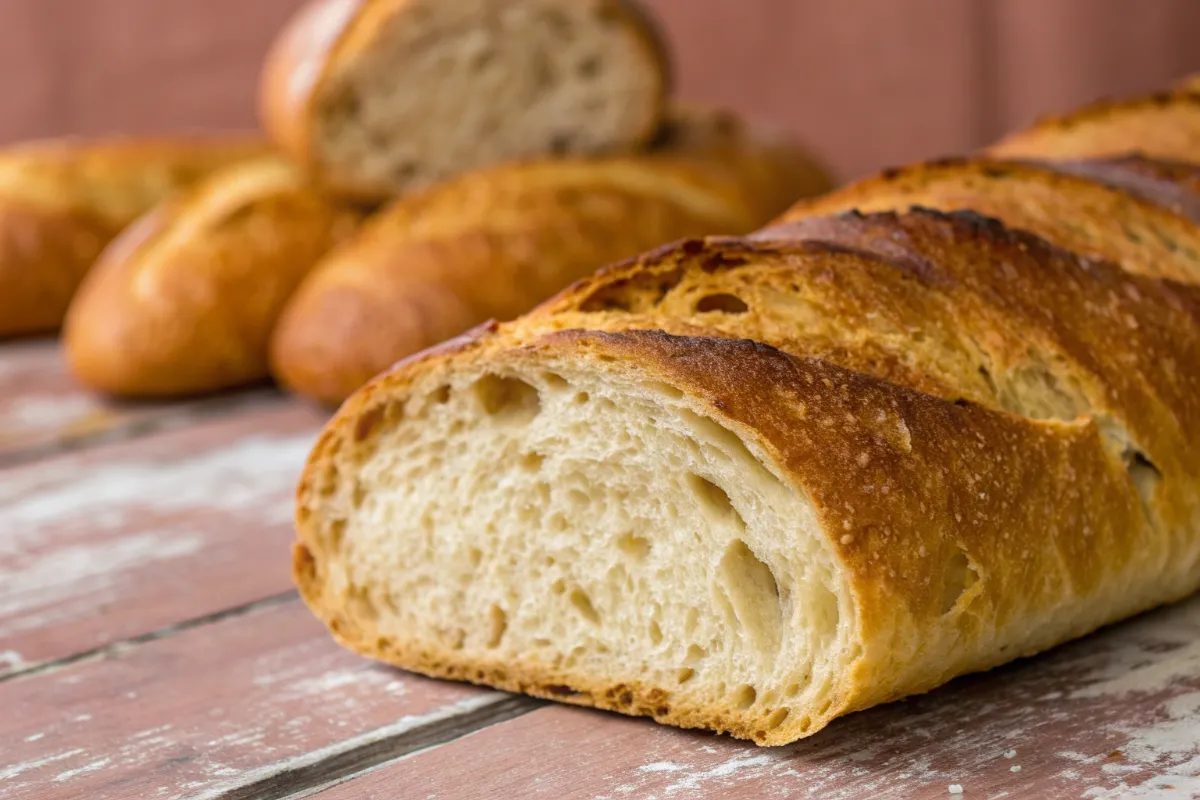
Table of contents
Sourdough Baguette Recipe Card
Sourdough Baguette Recipe
3
servings23
hours25
minutes210
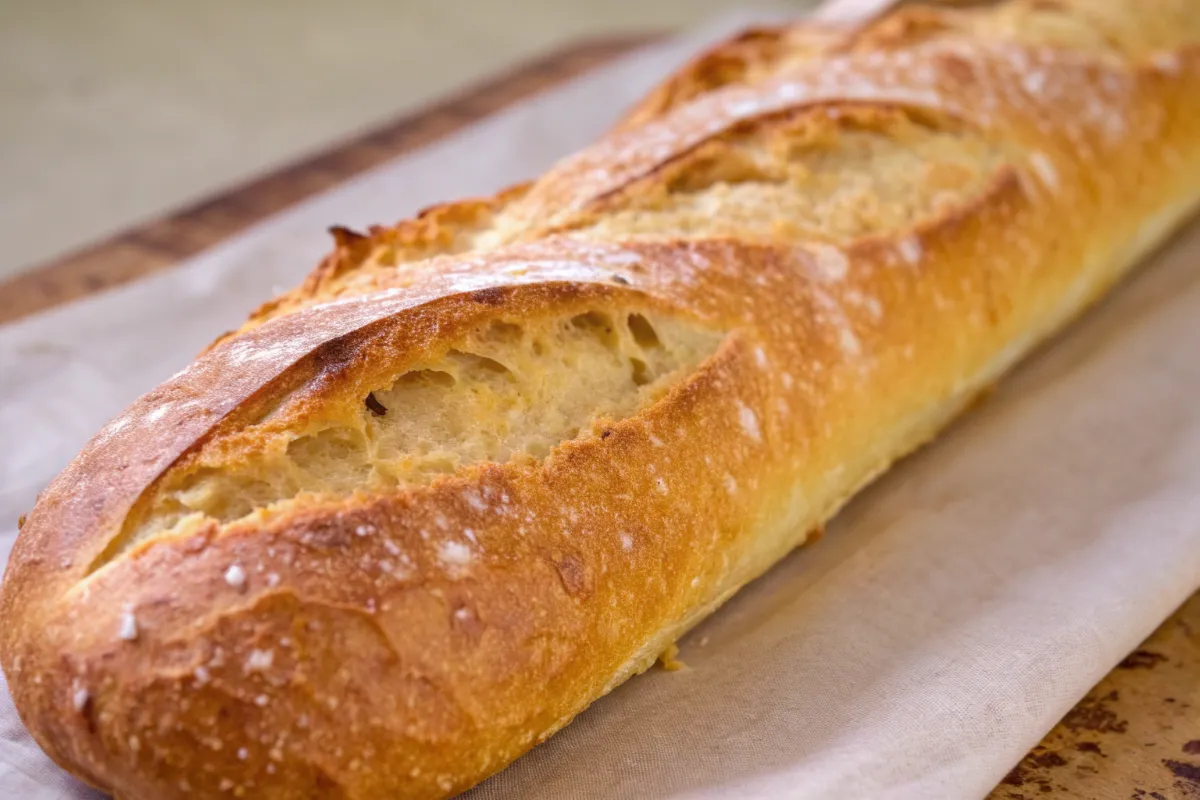
kcalThis authentic sourdough baguette recipe yields three crispy, golden loaves with a soft, airy interior. It uses a long cold fermentation for maximum flavor and digestibility.
Keep the screen of your device on
Ingredients
500.0 grams Bread Flour (high protein)
375.0 grams Water (warm, 80°F)
100.0 grams Active Sourdough Starter (100% hydration)
10.0 grams Sea Salt
Directions
- Start by mixing the flour and water in a large bowl until no dry flour remains. Let this rest for 60.0 minutes. This process is called autolyse and helps the gluten develop.
- Add the active sourdough starter and the salt to the dough. Squeeze the dough with your hand to incorporate the ingredients. Use a method called “Rabaud mixing” or slap and fold for about 5.0 minutes until the dough is smooth.
- Cover the bowl and let it ferment at room temperature for 4.0 hours. During this time, perform a “coil fold” every 45.0 minutes. This strengthens the dough.
- After the bulk fermentation, cover the bowl tightly and place it in the refrigerator for 12.0 to 16.0 hours.
- The next day, remove the dough and divide it into three equal pieces. Pre-shape them into rough logs and let them rest on the counter for 20.0 minutes.
- Shape each piece into a long baguette cylinder with tapered ends. Place them on a floured baker’s cloth (couche), creating folds between each loaf to support their shape. Let them proof for 45.0 to 60.0 minutes.
- Preheat your oven to 475°F (245°C) with a baking stone and a steam tray inside. Transfer the baguettes to a peel. Score them with a razor blade. Slide them onto the baking stone and add boiling water to the steam tray.
- Bake for 20.0 to 25.0 minutes. Remove the steam tray halfway through to allow the crust to caramelize. Cool on a wire rack before slicing.
Notes
- Flour Type: Do not use all-purpose flour. You need bread flour with at least 12% protein for structure.
- Starter: Ensure your starter has been fed recently and floats in water (the float test).
- Storage: Baguettes are best eaten the same day. Freeze leftovers immediately wrapped in foil.
Nutrition Facts
- Fat: 2g
- Sodium: 1100mg
- Carbohydrates: 130g
- Protein: 20g
Did you make this recipe?
Tag @therecipemasterblog on Instagram and hashtag it with #therecipemaster
Like this recipe?
Follow @therecipemasterblog on Pinterest
Follow us on Facebook!
Follow The Recipe Master on Facebook
The Baker’s Mise en Place
Sourdough relies on timing. To ensure your sourdough baguette recipe goes smoothly, prepare these elements ahead of time:
- Feed Your Starter: Your starter must be active and bubbly. Feed it 4 to 6 hours before you plan to mix the dough.
- Clear the Fridge: You will need space for the dough to rest overnight. Clear a flat shelf.
- Prepare the Couche: If you don’t have a baker’s linen (couche), prep a clean, heavy kitchen towel by dusting it heavily with rice flour.
- Tool Check: Locate your razor blade (lame) or a very sharp knife. A dull blade will drag the dough.
The Secret to Open Crumb
The magic of this sourdough baguette recipe lies in the hydration and fermentation balance. Many recipes are either too dry, resulting in a dense crumb, or too wet, making them impossible to shape. My version sits at about 75% hydration. This sweet spot creates those coveted large holes (alveoli) while remaining manageable for home bakers.
Furthermore, this recipe utilizes a “cold retard” in the fridge. This slows down the yeast activity but allows the bacteria to develop a complex, tangy flavor. You can easily customize this. If you prefer a nuttier profile, substitute 10% of the white flour with whole wheat or rye. For those interested in the science of flour and water ratios, you can read about baker’s percentage mathematics. It explains why weighing ingredients is crucial for consistency.
Mastering the Shape
Shaping a baguette is technically challenging. Follow these tips to master this sourdough baguette recipe:
- Rice Flour is Key: Use rice flour to dust your proofing cloth. It has no gluten, so the wet dough won’t stick to it like it does with wheat flour.
- Create Tension: When shaping, you must create surface tension. Pull the dough tight against the counter. This helps the bread spring up in the oven.
- Steam is Essential: Home ovens are dry. Place a cast-iron skillet on the bottom rack. Pour boiling water into it when you load the bread. The steam keeps the crust soft initially, allowing the loaf to expand.
- The Poke Test: Before baking, gently poke the dough. If it springs back slowly, it is ready. If it springs back instantly, it needs more time.
For more details on why steam matters, check out this guide on oven steam techniques.
Creative Sourdough Baguette Recipe Spins
The Seeded Harvest Variant
For a crunchy texture, roll your shaped baguettes in a mixture of sesame, poppy, and flax seeds before the final proof. To make the seeds stick, lightly mist the dough with water. This adds a nutty aroma that toasts beautifully in the oven. The seeds also provide healthy fats and fiber.
The Roasted Garlic and Herb Twist
Fold in 10.0 roasted garlic cloves and 1.0 tablespoon of fresh chopped rosemary during the bulk fermentation (specifically during the second set of folds). This savory variant is incredible when dipped in olive oil. Be gentle when shaping, as the garlic cloves can tear the gluten structure if handled roughly.
If you have leftover starter, try my Sourdough Pizza Dough for a Friday night treat.
Sourdough Q&A
Density usually comes from a weak starter or under-fermentation. Ensure your starter triples in volume before using it. Also, be careful not to knock all the air out during the final shaping.
A baking stone helps, but you can use an inverted baking sheet. The goal is to retain heat so the dough gets an immediate “oven spring” when loading.
High hydration and proper handling are key. Do not over-knead the dough during the final stages. Handle it gently like a delicate balloon to preserve the air bubbles created by the yeast.
This is often due to over-proofing. If the dough sits too long, the gluten structure degrades. It can also happen if you didn’t create enough surface tension during shaping.
The Joy of Broken Bread
I hope this sourdough baguette recipe brings the aroma of a French boulangerie into your home. The process of turning flour, water, and salt into something so complex is truly rewarding. It requires patience, but the result is a crust that shatters and a crumb that melts in your mouth.






Leave a Reply