

- Make dough 24 to 48 hours ahead for slow fermentation and deeper flavor.
- Coat the pan liberally with olive oil to shallow-fry the bottom and prevent sogginess.
- Use higher hydration dough and bread flour for an airy, chewy crumb and crisp crust.
- Pre-cook watery toppings, warm dough to room temp, and bake on the lowest rack at high heat.
There is a specific kind of magic that happens when you pull a sizzling, golden sheet pan pizza out of a hot oven. Growing up, Friday nights were strictly reserved for pizza, but as a chef, I learned that the best pies aren’t always round. This recipe pays homage to the “Grandma Pie”, a square, home-style pizza with a crust that is fried in olive oil on the bottom and fluffy in the middle.
This sheet pan pizza fits perfectly into the modern home cook’s repertoire. It is the ultimate festive dish for a budget-friendly party, yet simple enough for a comforting weeknight meal. Unlike fussy Neapolitan styles that require a wood-fired oven, this recipe embraces the standard equipment found in every kitchen. It is humble, hearty, and creates enough slices to ensure no one leaves the table hungry.
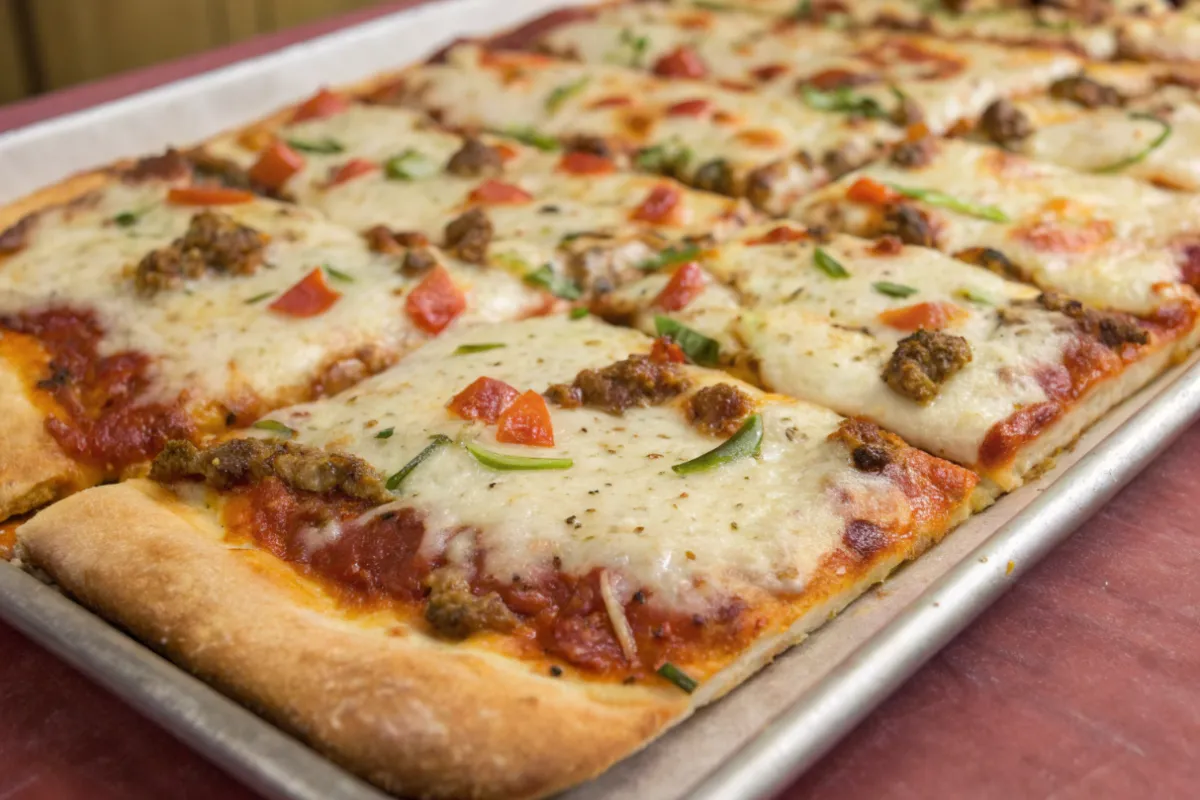
Table of contents
The Dough Schedule
The beauty of sheet pan pizza is that the hard work is done hours, or even days, in advance. Here is how to organize your timeline so you aren’t rushing at dinner time:
- Make the Dough Early: The dough flavor improves with time. You can make it 24 to 48 hours in advance and let it slow-ferment in the fridge. This develops a complex, yeasty flavor.
- Shred the Cheese: Pre-shredded cheese contains anti-caking agents that prevent proper melting. Grate your mozzarella the morning of and keep it chilled.
- Pre-Cook Watery Veggies: If you plan to add mushrooms, spinach, or zucchini, sauté them beforehand to release their moisture. This prevents a watery top.
- Sauce Station: Make your sauce ahead of time. Flavors in a marinara need time to meld.
Sheet Pan Pizza Recipe Card
Sheet Pan Pizza Recipe
8
servings25
minutes20
minutes350
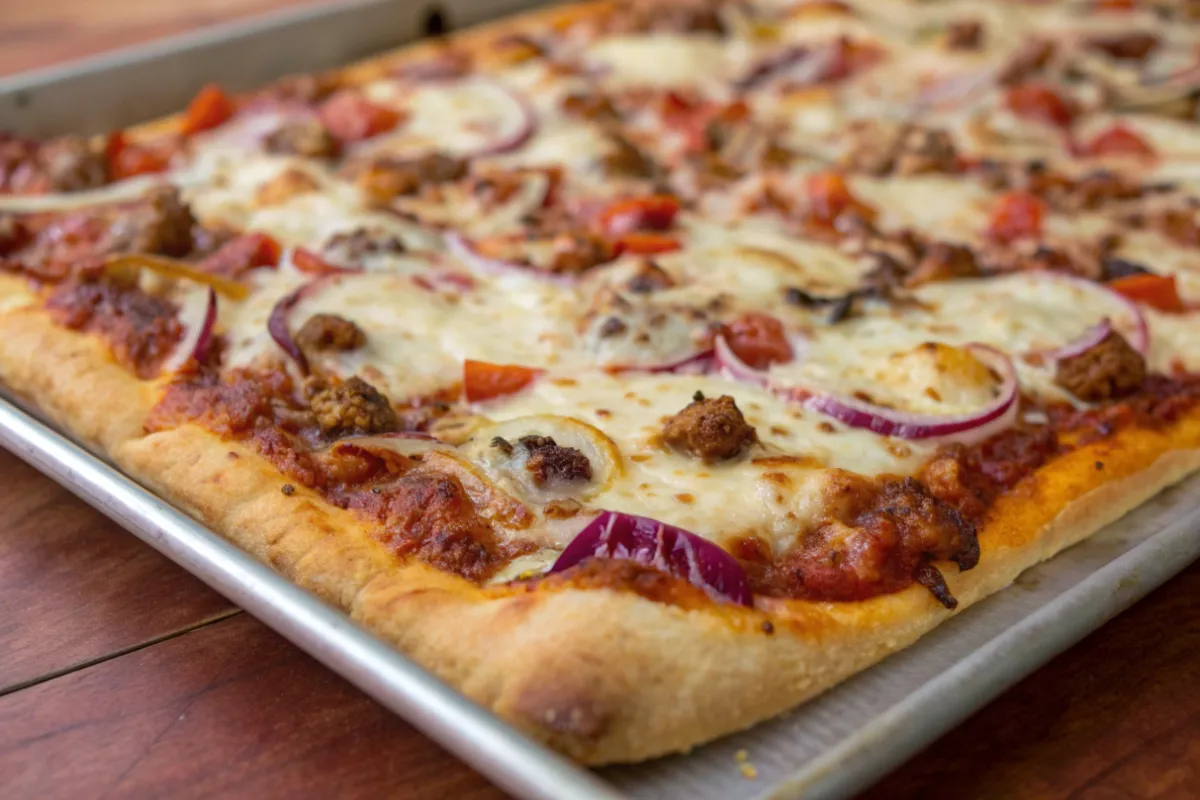
kcalThis sheet pan pizza features a thick, airy crust with a crispy, fried bottom. It is topped with tangy tomato sauce and bubbly mozzarella for a nice feast.
Keep the screen of your device on
Ingredients
- For the Dough:
4.0 cups Bread Flour (plus extra for dusting)
2.25 teaspoons Instant Yeast (1 packet)
1.5 cups Warm Water (110°F)
2.0 tablespoons Olive Oil
1.5 teaspoons Kosher Salt
1.0 teaspoon Sugar
- For the Pan & Topping:
0.25 cup Olive Oil (for the pan)
1.5 cups Pizza Sauce (thick consistency)
16.0 oz Low-Moisture Mozzarella, freshly grated
0.5 cup Parmesan Cheese, grated
1.0 teaspoon Dried Oregano
Fresh Basil leaves (for garnish)
Red onion (optional)
Red pepper (optional)
Beef (optional)
Directions
- Start by making the dough. In a large bowl or stand mixer, combine the bread flour, sugar, salt, and instant yeast. Pour in the warm water and 2.0 tablespoons of olive oil. Mix until a shaggy dough forms. Knead on medium speed (or by hand) for about 7.0 minutes until the dough is smooth and tacky, but not sticky. Cover and let rise in a warm spot for 1.5 hours until doubled.
- Now, prepare your vessel. Pour the 0.25 cup of olive oil directly onto a standard 18×13 inch rimmed baking sheet. Use your hands to coat the entire bottom and sides. Gently transfer the risen dough into the oiled pan. Turn the dough over so both sides are coated in oil.
- Using your fingertips, gently press and stretch the dough toward the corners. If it springs back, stop, cover it, and let it rest for 10.0 minutes. Once it relaxes, stretch it again until it fills the pan. Cover the pan with plastic wrap and let it proof again for 30.0 minutes. It should look puffy.
- Preheat your oven to 500°F (or 260°C). Place the rack in the lowest position.
- To assemble, gently spread the pizza sauce over the dough, leaving a small border for the crust. Sprinkle the oregano over the sauce. Cover evenly with the shredded mozzarella and Parmesan.
- Bake on the bottom rack for 18.0 to 22.0 minutes. You are looking for a deep golden-brown cheese and a crust that has pulled away from the sides of the pan. Remove from the oven and let it rest for 5.0 minutes before slicing. Garnish with fresh basil.
Notes
- Bread Flour vs. All-Purpose: Bread flour has higher protein, which gives the sheet pan pizza enough structure to hold the toppings without becoming floppy.
- Sauce Consistency: Use a thick sauce. Since the pizza bakes for a while, a watery sauce will soak into the dough and ruin the airy texture.
- Reheating: Reheat leftovers in a dry skillet over medium heat to crisp up the bottom again.
Nutrition Facts
- Fat: 14g
- Sodium: 680mg
- Carbohydrates: 42g
- Protein: 15g
Did you make this recipe?
Tag @therecipemasterblog on Instagram and hashtag it with #therecipemaster
Like this recipe?
Follow @therecipemasterblog on Pinterest
Follow us on Facebook!
Follow The Recipe Master on Facebook
The Science of the Crust
This sheet pan pizza recipe works because it prioritizes texture. Many home cooks struggle with soggy bottoms when baking in a tray. We solve this by using a generous amount of olive oil to coat the pan before the dough goes in. This essentially shallow-fries the bottom of the crust while it bakes, creating a satisfying “crunch” that supports the toppings.
- Hydration is Key: We use a slightly higher hydration dough. This means the crumb remains airy and light, rather than dense and bread-like.
- No Special Gear: You do not need a pizza stone or a peel. The metal sheet pan conducts heat rapidly, ensuring an even bake.
- Customization: This base is a blank canvas. You can load it with roasted vegetables, varying cheeses, or lean proteins.
For those interested in the science of gluten development, understanding how flour protein works will help you see why we prefer bread flour over all-purpose flour for this specific chewy texture.
Chef’s Secrets for a Golden Crust
To achieve a professional-quality sheet pan pizza, you need to treat your oven and your pan with respect. Here are the actionable tips that change the game:
- Room Temperature Dough: Never try to stretch cold dough. It will snap back like a rubber band. Let your dough sit on the counter for at least an hour before you try to fit it into the pan.
- Rack Position: Place your oven rack in the lowest position possible. This gets the pan closer to the heating element, ensuring the bottom crisps up before the cheese burns.
- Don’t Fear the Oil: You might think it is too much oil for the pan, but do not skimp. That oil is the barrier between a stuck, pale crust and a golden, fried masterpiece.
- High Heat: Crank your oven as high as it goes. Most home ovens max out at 500°F or 550°F. Pizza loves intense heat.
For more insights on baking the best pizza dough, check out this guide on Pizza dough.
Creative Topping Ideas for Sheet Pan Pizza
The White Garlic & Spinach (Pizza Bianca)
Skip the tomato sauce entirely for this elegant twist. Brush the dough with garlic-infused olive oil. Top it with dollops of whole-milk ricotta, mozzarella, and sautéed spinach seasoned with lemon zest. The creamy richness of the ricotta pairs beautifully with the crispy, oily crust. It feels sophisticated enough for a dinner party.
The BBQ Chicken & Red Onion
This is a crowd favorite that balances sweet and savory. Toss cooked, shredded chicken breast in your favorite smoky barbecue sauce. Spread a thin layer of BBQ sauce on the dough, followed by mozzarella, smoked Gouda, the chicken, and thinly sliced red onions. Finish with fresh cilantro after baking. The Gouda adds a smoky depth that mimics bacon without using pork.
The Mediterranean Veggie Supreme
Load up on fresh flavors by using a base of pesto (or red sauce). Top with artichoke hearts, Kalamata olives, roasted red peppers, and crumbled feta cheese alongside the mozzarella. The salty brine of the olives and the tang of the feta cut through the richness of the dough perfectly.
Sheet Pan Pizza Problems Solved
The standard size is a “half sheet pan,” which measures approximately 18 by 13 inches. If your pan is smaller, you will have a thicker, more focaccia-like crust.
Yes, and liberally! You should use about a quarter cup of olive oil. This is not just to prevent sticking; it is an ingredient that fries the bottom crust to create texture and flavor.
I do not recommend it. Parchment paper acts as a barrier between the dough and the hot metal. You want direct contact with the oil and the metal to get that signature fried bottom on your sheet pan pizza.
Final Thoughts
Mastering this sheet pan pizza will change the way you look at homemade baking. It proves that you do not need a backyard brick oven to achieve a crust that shatters when you bite into it. By focusing on the dough and the heat management, you create a meal that is comforting, communal, and undeniably delicious.






Leave a Reply