

- Slow-simmer the brisket low and long to break down collagen for fork-tender, juicy corned beef.
- Rinse the brisket overnight to reduce surface curing salt and control overall saltiness.
- Add carrots, potatoes, and cabbage in the last hour; cabbage only 15–20 minutes to avoid mushiness.
- Enhance flavor with aromatics, pickling spices, and a Guinness+brown sugar glaze for depth and browning.
- Rest meat 15 minutes and always slice against the grain for tender, easy-to-chew slices.
Few dishes evoke the warmth and cozy satisfaction of a perfectly cooked holiday meal quite like corned beef and cabbage. For me, the smell of the savory spice blend wafting through the house instantly transports me back to my grandmother’s kitchen. This corned beef and cabbage isn’t just a St. Patrick’s Day tradition; it’s a hearty, budget-friendly meal that should be celebrated year-round. It’s the ultimate comfort food option. Using a slow-simmering technique, this recipe ensures the brisket is fork-tender, juicy, and beautifully infused with flavor.

Table of contents
Corned Beef and Cabbage Recipe Card
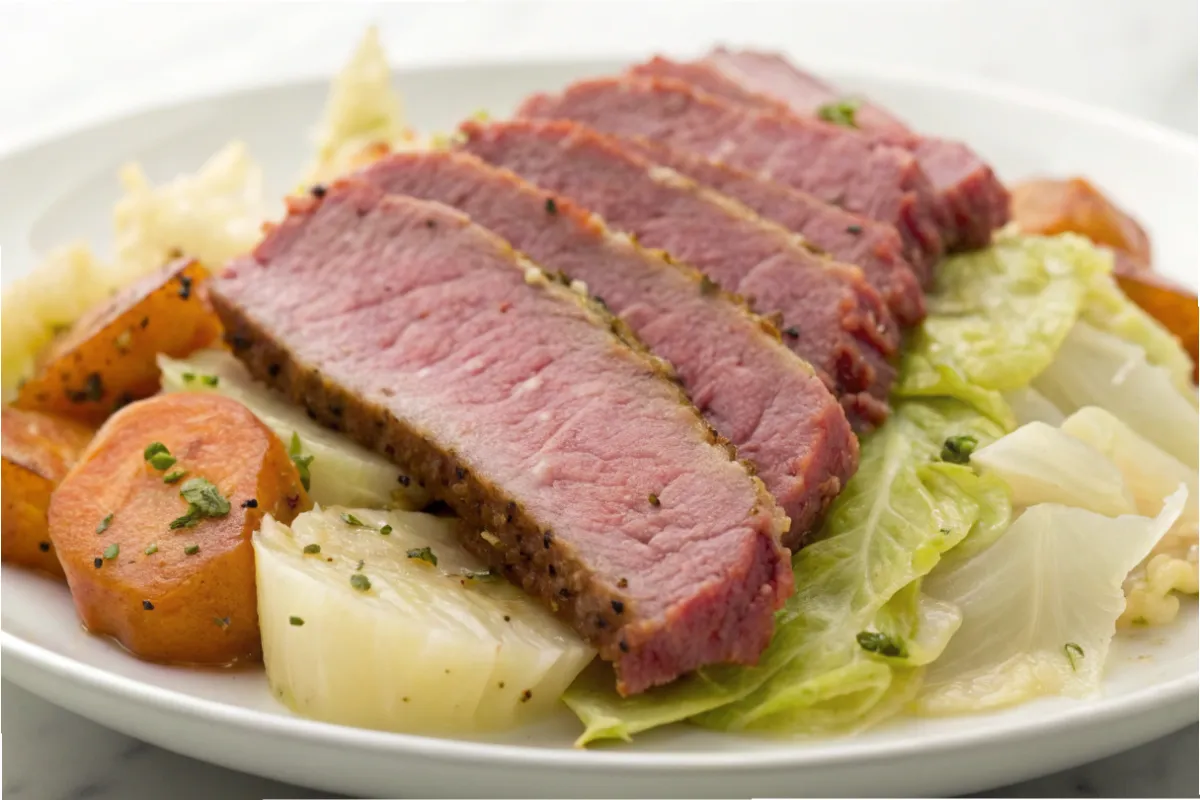
Corned Beef and Cabbage
6
servings15
minutes40
minutes210
kcalThis corned beef and cabbage recipe results in incredibly tender brisket and perfectly cooked vegetables, making it the perfect family dinner or festive meal.
Keep the screen of your device on
Ingredients
1 (3-4 pound) corned beef brisket with seasoning packet
1 tablespoon brown sugar
1 onion, quartered
3 cloves garlic, smashed
4 cups beef broth or water (enough to cover the brisket)
6 medium Russet potatoes, peeled and quartered
4 large carrots, cut into 1-inch chunks
1 head green cabbage, cut into 6-8 wedges
2 tablespoons unsalted butter (for finishing)
Directions
- Step 1: Simmer the Brisket In a large Dutch oven or stockpot, place the corned beef brisket and the seasoning packet (if using). Add the brown sugar, onion, garlic, and enough beef broth or water to fully submerge the meat. Bring to a boil, then immediately reduce the heat to a low simmer, cover, and cook for 3 hours.
- Step 2: Add Root Vegetables After 3 hours, add the potatoes and carrots to the pot. Ensure they are submerged in the cooking liquid. Continue to simmer for another 20 minutes, covered.
- Step 3: Cook the Cabbage Gently nestle the cabbage wedges into the liquid around the meat and vegetables. Continue to simmer, covered, for an additional 15-20 minutes, or until the cabbage is tender-crisp.
- Step 4: Rest, Slice, and Serve Remove the corned beef from the pot and let it rest for 15 minutes, covered loosely with foil. Toss the cooked vegetables with 2 tablespoons of butter and a pinch of pepper. Slice the corned beef against the grain and serve immediately with the vegetables and a generous spoonful of cooking broth.
Notes
- Brisket Placement: For even cooking, place the corned beef fat side up in the cooking liquid. This allows the fat to baste the meat as it slowly renders.
- Don’t Boil: Maintain a simmer (very low bubbles). Boiling the meat will make it tough and dry, not tender.
- Leftovers: Leftover corned beef and cabbage is fantastic. Store separately in the fridge for up to 4 days. The corned beef makes incredible hash or Reuben sandwiches.
Nutrition Facts
- Fat: 28g
- Carbohydrates: 40g
- Fiber: 8g
- Protein: 35g
Did you make this recipe?
Tag @therecipemasterblog on Instagram and hashtag it with #therecipemaster
Like this recipe?
Follow @therecipemasterblog on Pinterest
Follow us on Facebook!
Follow The Recipe Master on Facebook
Flavor Building Strategy
This corned beef and cabbage recipe stands out because it focuses on developing layers of flavor while ensuring maximum tenderness, which is crucial for the brisket cut.
- Low and Slow is Essential: Unlike many recipes that rush the process, we rely on long, low-temperature simmering. This breaks down the tough collagen fibers in the brisket, resulting in that fall-apart texture everyone craves.
- Aromatic Infusion: We don’t just use the included seasoning packet. We add aromatics like garlic, bay leaves, and a touch of brown sugar or Guinness. This deepens the complexity, balancing the saltiness of the corned beef with earthy sweetness.
- Timing the Veggies: The mistake many people make is cooking the vegetables for too long. We add the carrots, potatoes, and cabbage only in the last hour. This ensures they are tender-crisp and maintain their flavor and vibrant color, preventing the mushiness of overcooked vegetables.
This dish is naturally gluten-free and, due to its hearty nature, serves as a filling, high-protein meal. You can easily make it low-sodium by rinsing the brisket thoroughly before cooking, as noted by The New York Times Cooking when discussing traditional methods.
Prep Ahead for Stress-Free Serving
While the cooking time is long, the active prep time for corned beef and cabbage is minimal. Doing these simple steps in advance will make the final assembly seamless.
- Rinse the Brisket: The night before, unwrap the corned beef and give it a good rinse under cold water. This helps remove some of the surface curing salt, mitigating potential saltiness.
- Chop the Vegetables: Peel and chop the carrots and potatoes into uniform 1-inch pieces. Chop the onion and garlic. Store all vegetables in an airtight container in the refrigerator.
- The Spice Packet: If you are using your own blend (highly recommended!), mix all the pickling spices, peppercorns, and bay leaves together in a small bowl.
Avoid These Mistakes
Getting truly tender corned beef and cabbage requires patience and a few expert tricks that transform the cooking liquid into a rich broth.
- Don’t Overcook the Cabbage: The cabbage only needs a short, gentle steam bath in the finished broth. Add it last and pull it out just as it softens, about 15-20 minutes, to prevent it from becoming slimy.
- Slice Against the Grain: Brisket has visible muscle fibers (the grain). To ensure every slice is melt-in-your-mouth tender, you must slice the cooked beef perpendicular to the grain . This shortens the fibers, making the beef easy to chew.
- Guinness Glaze: For an unmatched flavor boost, stir a quarter cup of Guinness or a dark beer into the cooking liquid along with a tablespoon of brown sugar. The beer adds rich maltiness and the sugar aids in browning the beef slightly.
- Rest is Mandatory: Once the corned beef and cabbage is done, remove the meat from the liquid and let it rest, covered loosely with foil, for at least 15 minutes before slicing. This allows the juices to redistribute, ensuring maximum juiciness.
Choosing Your Pot
The size of your pot matters for corned beef and cabbage. A large Dutch oven or a 6-quart slow cooker is ideal. The beef needs to be fully submerged in the cooking liquid for the slow, moist heat to work its magic and break down the connective tissue. Using the right vessel ensures even cooking and tenderness.
International Inspirations of Corned Beef and Cabbage
Instant Pot Corned Beef and Cabbage
For a time-saving variant, adapt the recipe for an electric pressure cooker. You can achieve fall-apart tenderness in just 90 minutes by high-pressure cooking the corned beef in the broth. Add the potatoes and carrots for a final 4-minute high-pressure cycle, and steam the cabbage quickly after the final release. This is perfect for weeknights when you crave a hearty meal fast.
New England Boiled Dinner
This classic regional variant uses the same core ingredients but often includes turnips or parsnips alongside the potatoes and carrots. The difference is the emphasis on serving the meal with a rich mustard sauce (often featuring horseradish) rather than a sweet glaze. The broth is also served separately as a soup course.
The Reuben Casserole Twist
If you have leftover corned beef, turn it into a savory baked casserole. Layer sliced corned beef and cabbage with cubed rye bread, Swiss cheese, and a creamy Thousand Island dressing mixture. Bake until bubbly. This transforms the traditional dinner into a cheesy, decadent comfort dish.
Dinner Troubleshooting
Toughness is almost always due to cooking too fast or slicing incorrectly. Ensure the liquid is at a low simmer, not a rolling boil, and cook until it is fork-tender. Crucially, always slice the corned beef against the grain.
Yes, rinsing the corned beef under cold water is a quick step that helps wash away excess surface salt from the curing process. This is especially helpful if you are sensitive to sodium.
The traditional accompaniments are potatoes and carrots (included here), but I also love serving it with a side of creamy horseradish sauce and crusty Irish soda bread to soak up the savory broth.
Ready to Feast
Mastering this corned beef and cabbage recipe is easier than you think. By embracing the low and slow method and paying attention to when you add the vegetables, you can create a truly magnificent, tender, and deeply flavorful meal. It is a timeless classic that brings everyone to the table, and now you have the tools to make it perfectly.










Leave a Reply